












-
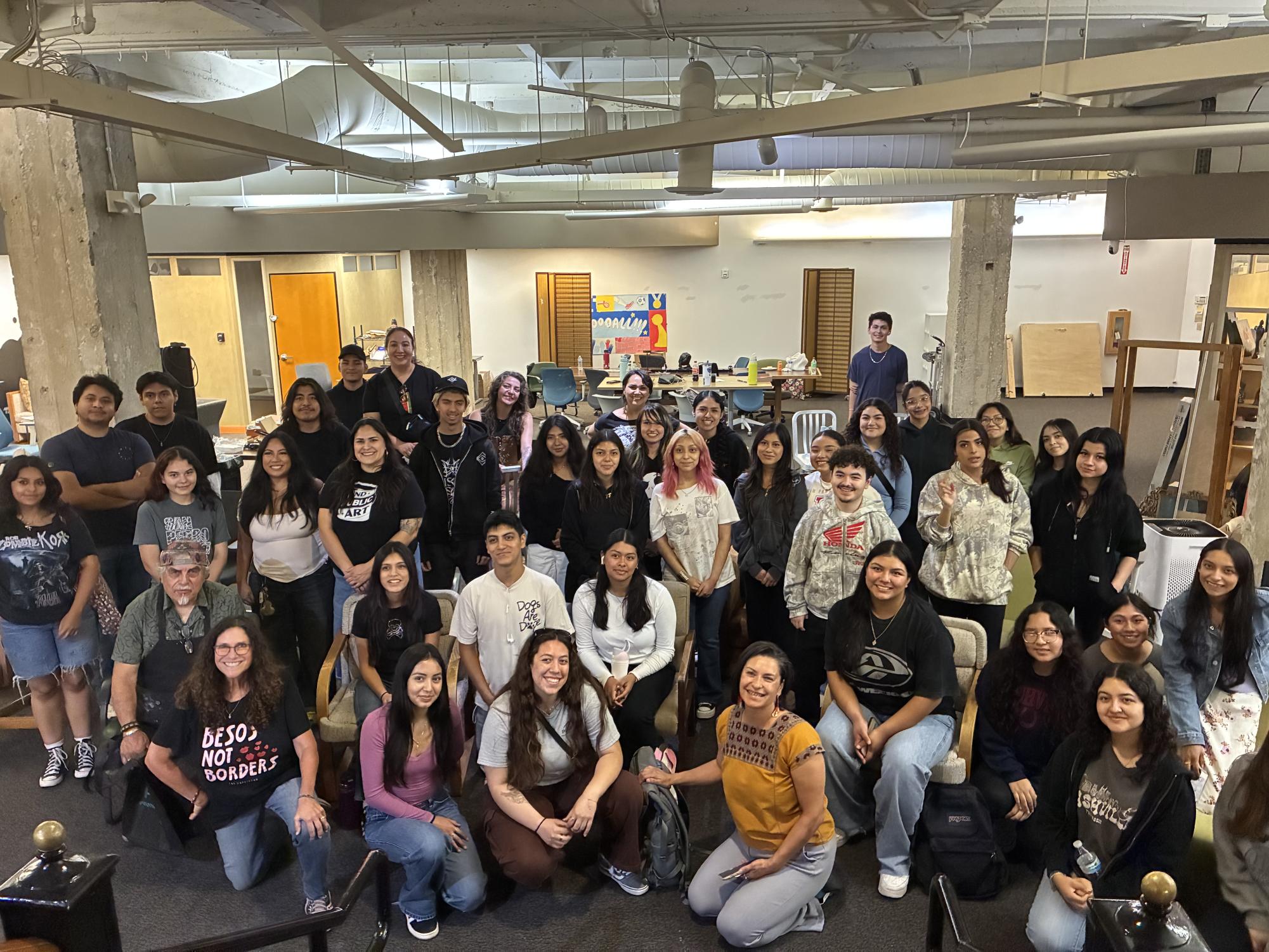
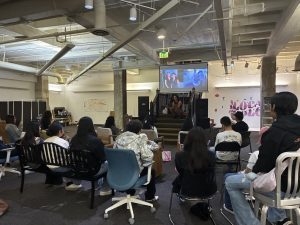
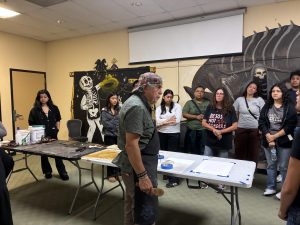
The Foothill Puente Cohort poses in the Local Art space.
-
-
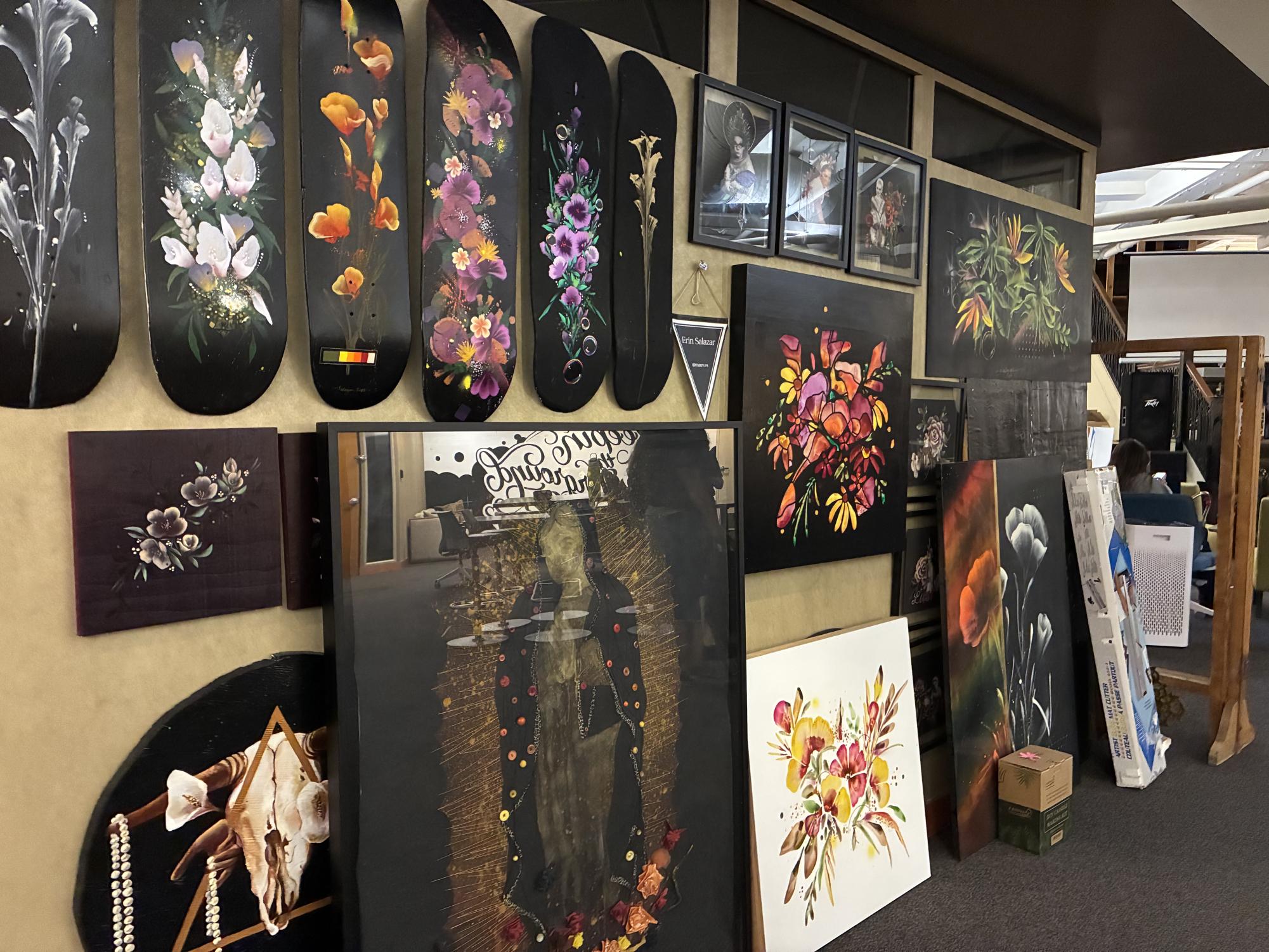
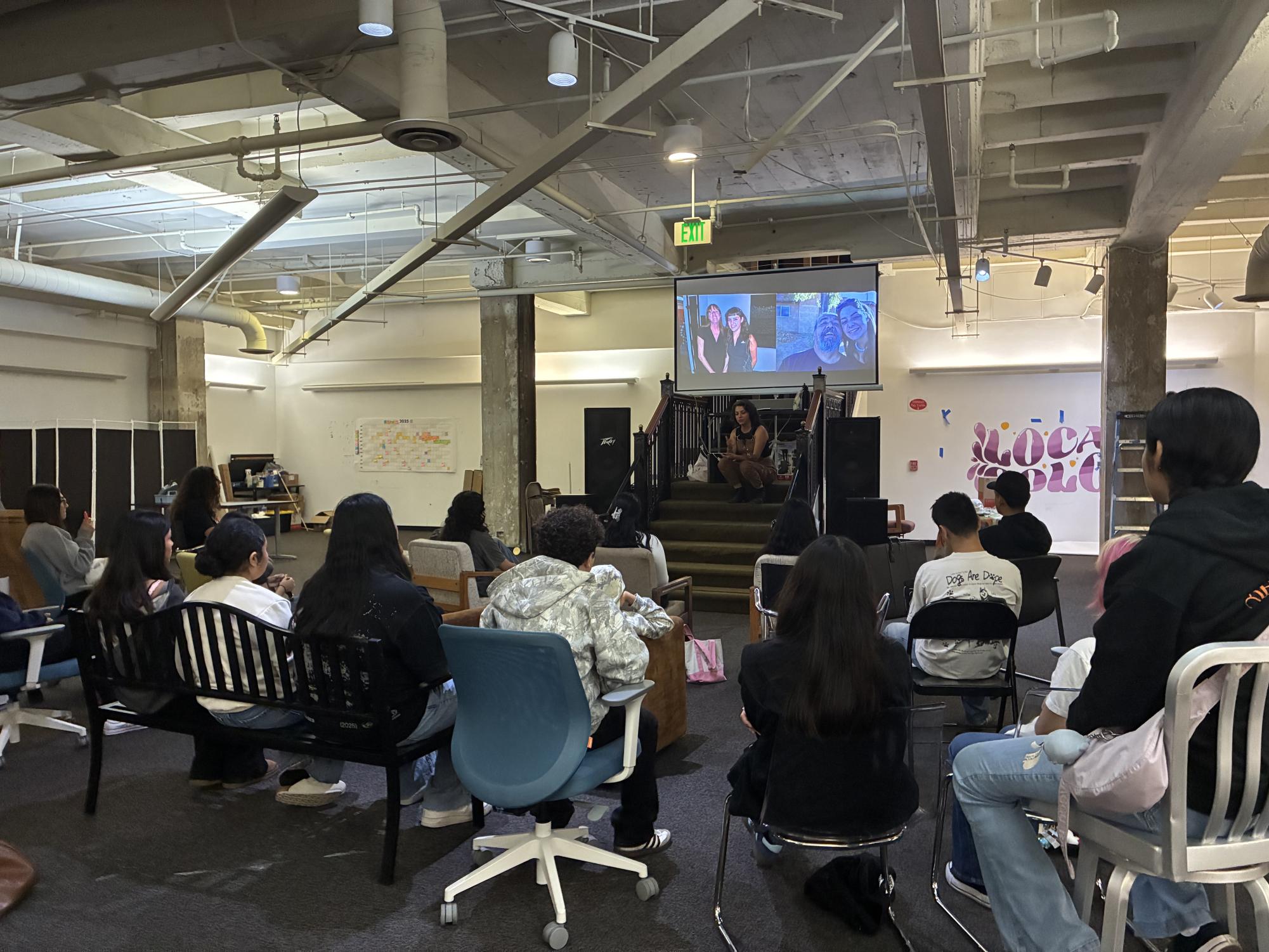
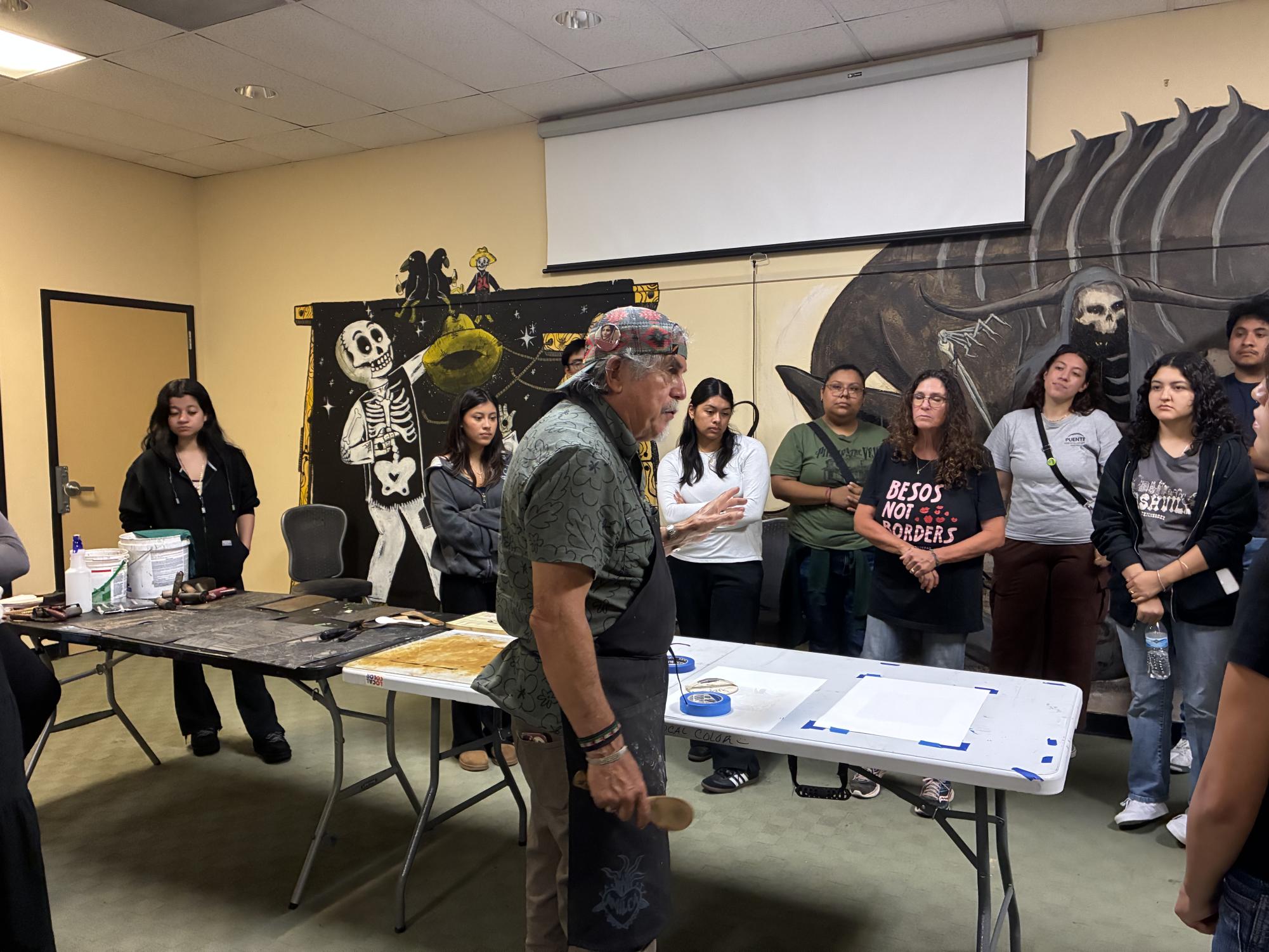
Students learn about the mission of Local Art.
-
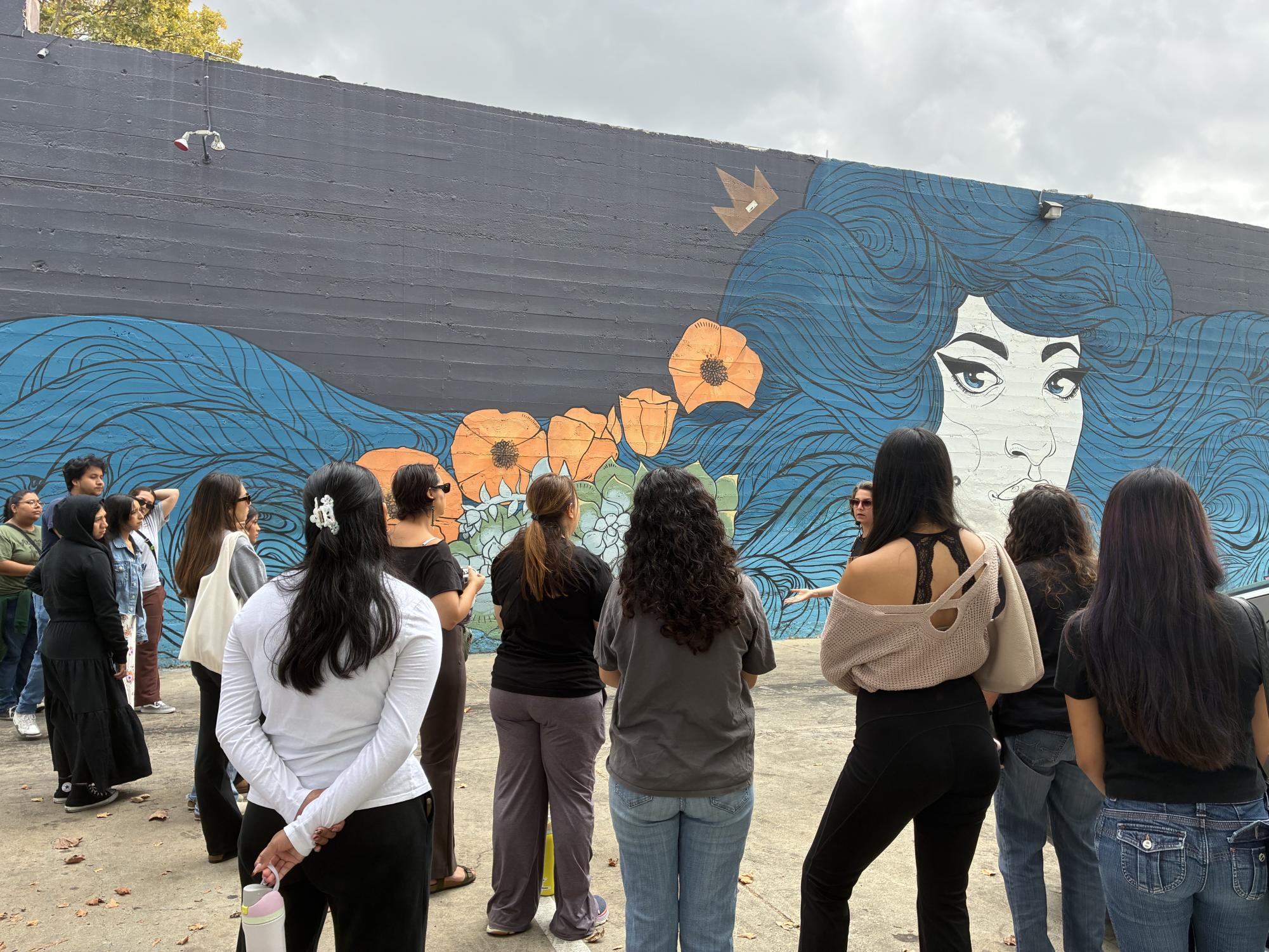
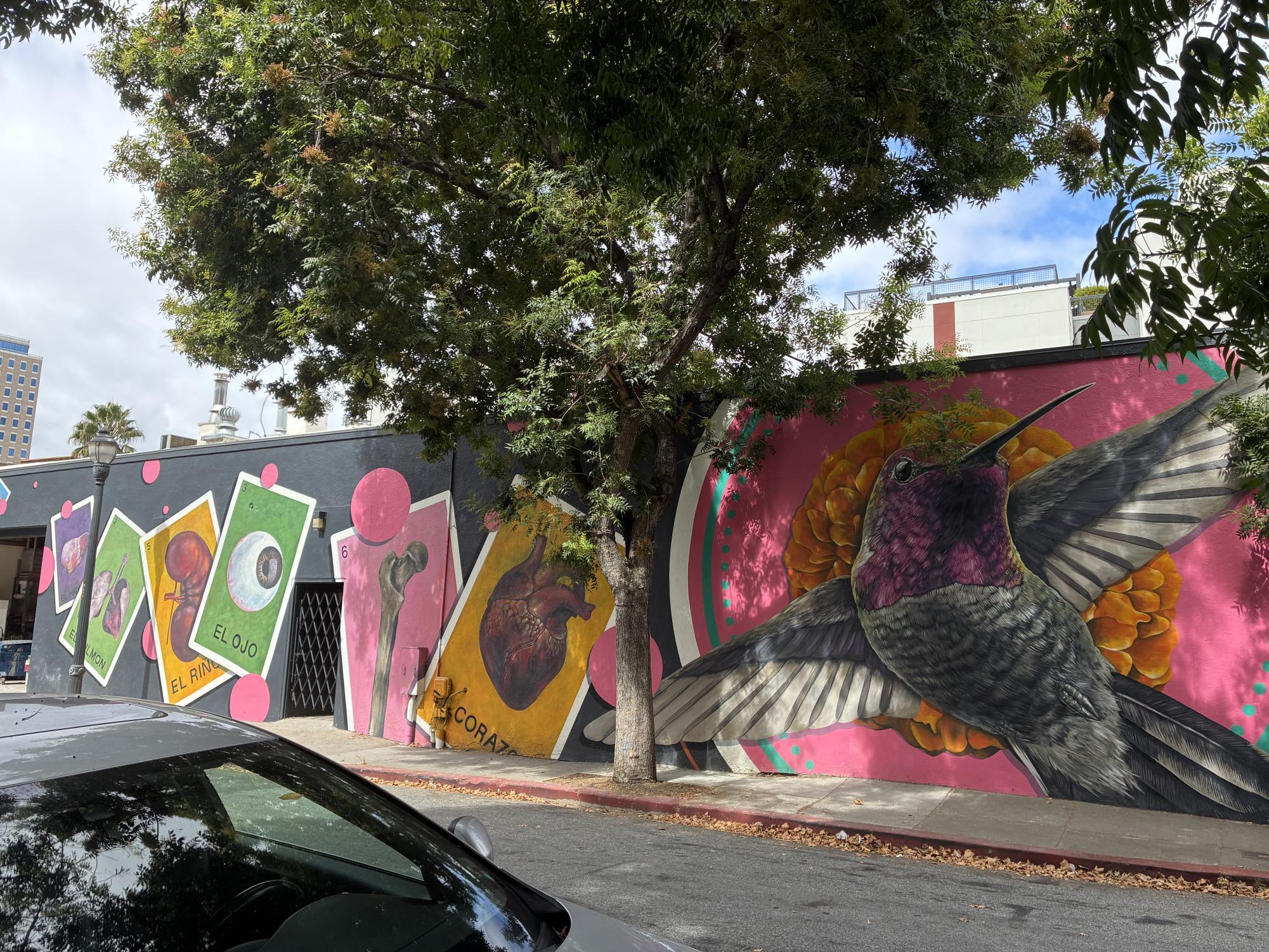
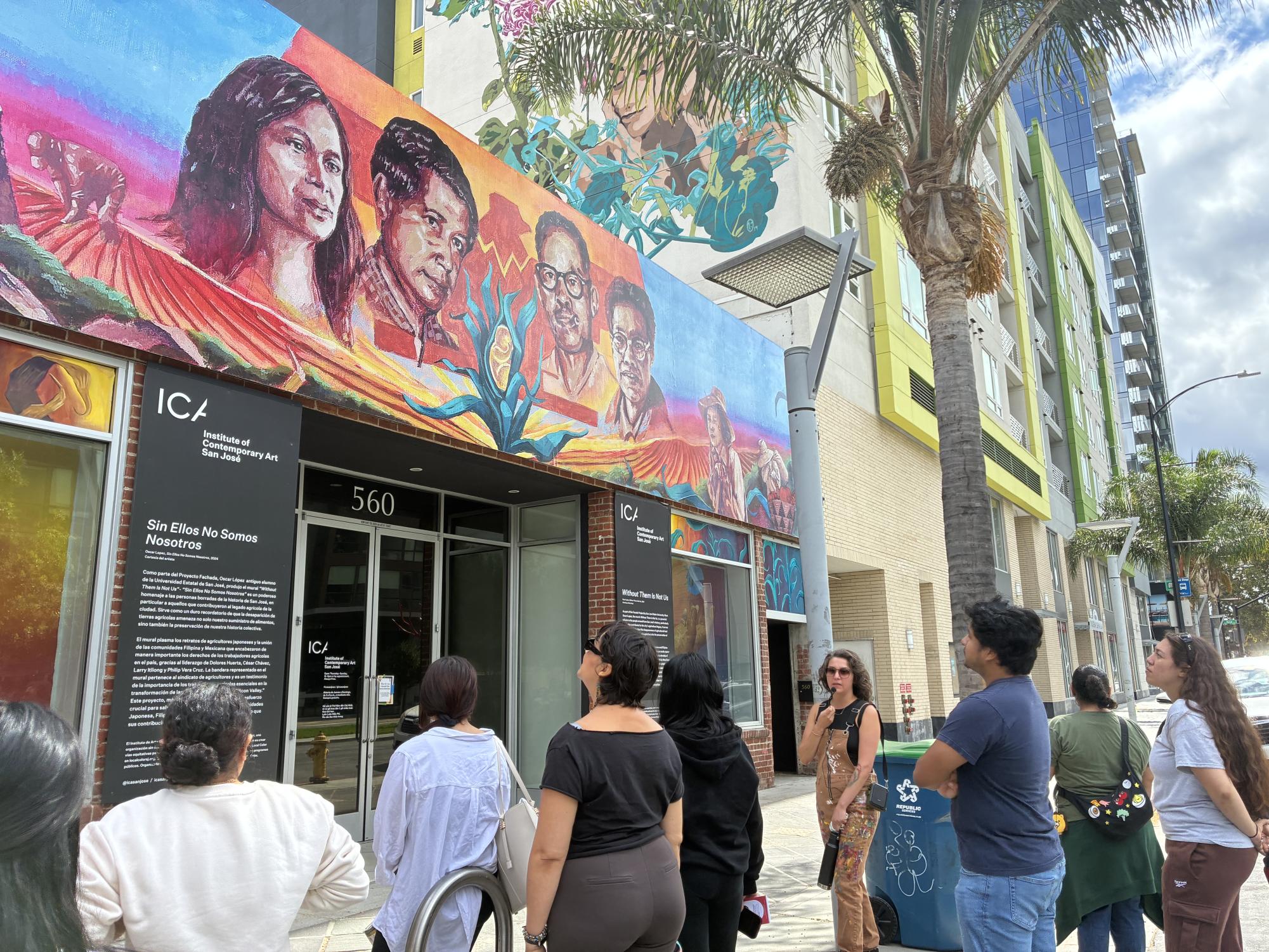
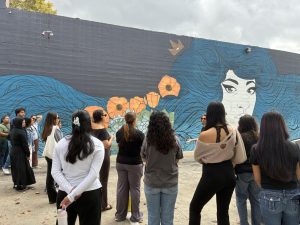
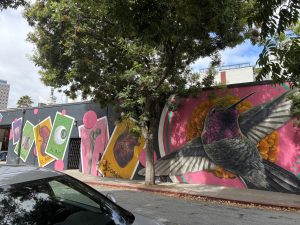
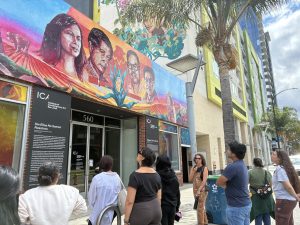
The Foothill Puente Cohort walks around downtown San Jose looking at murals.
-
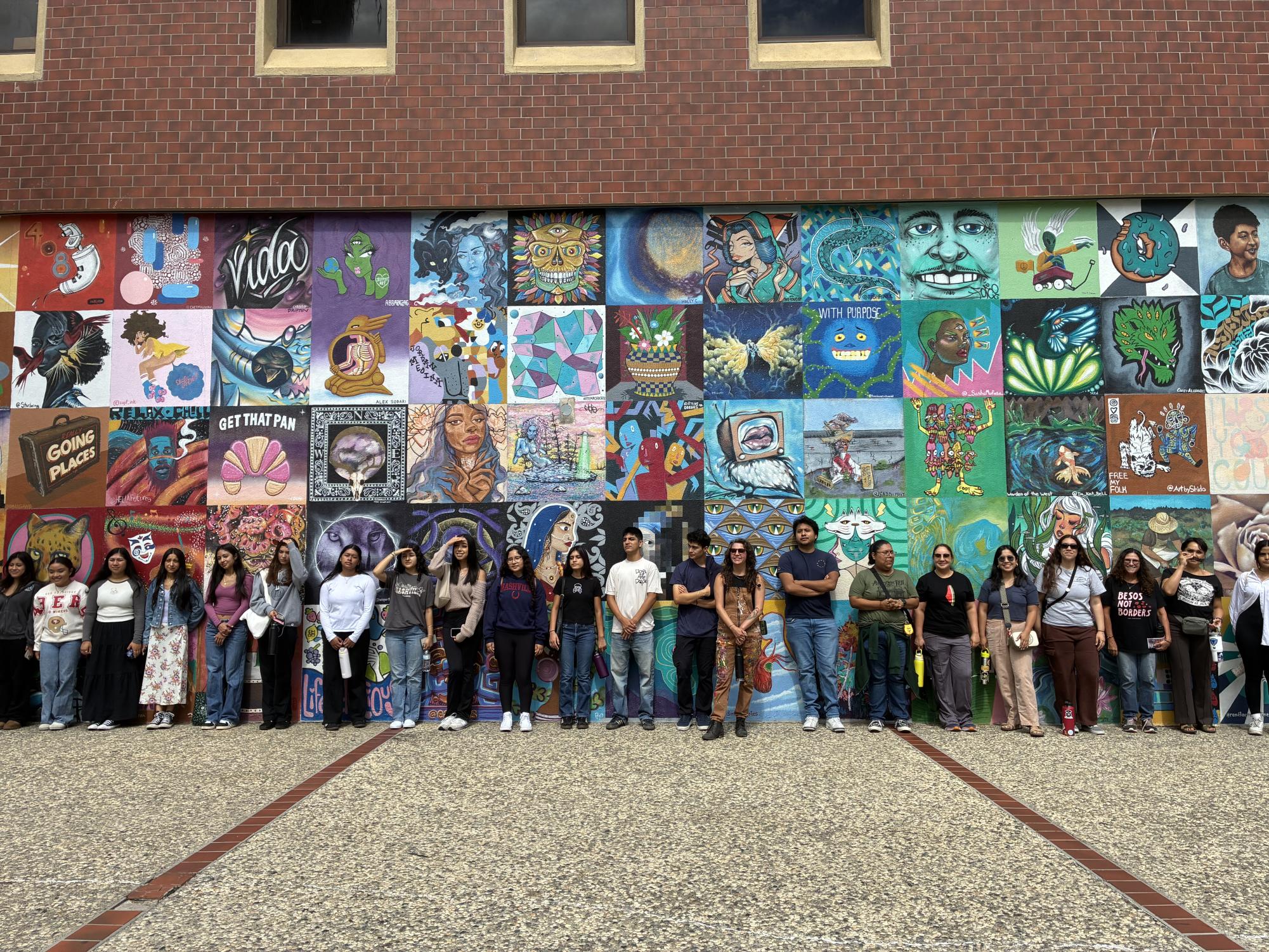
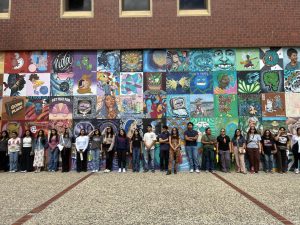
The Foothill Puente Cohort poses in front of one of the downtown San Jose murals.
-
-
The Foothill Puente Cohort walks around downtown San Jose looking at murals.
-
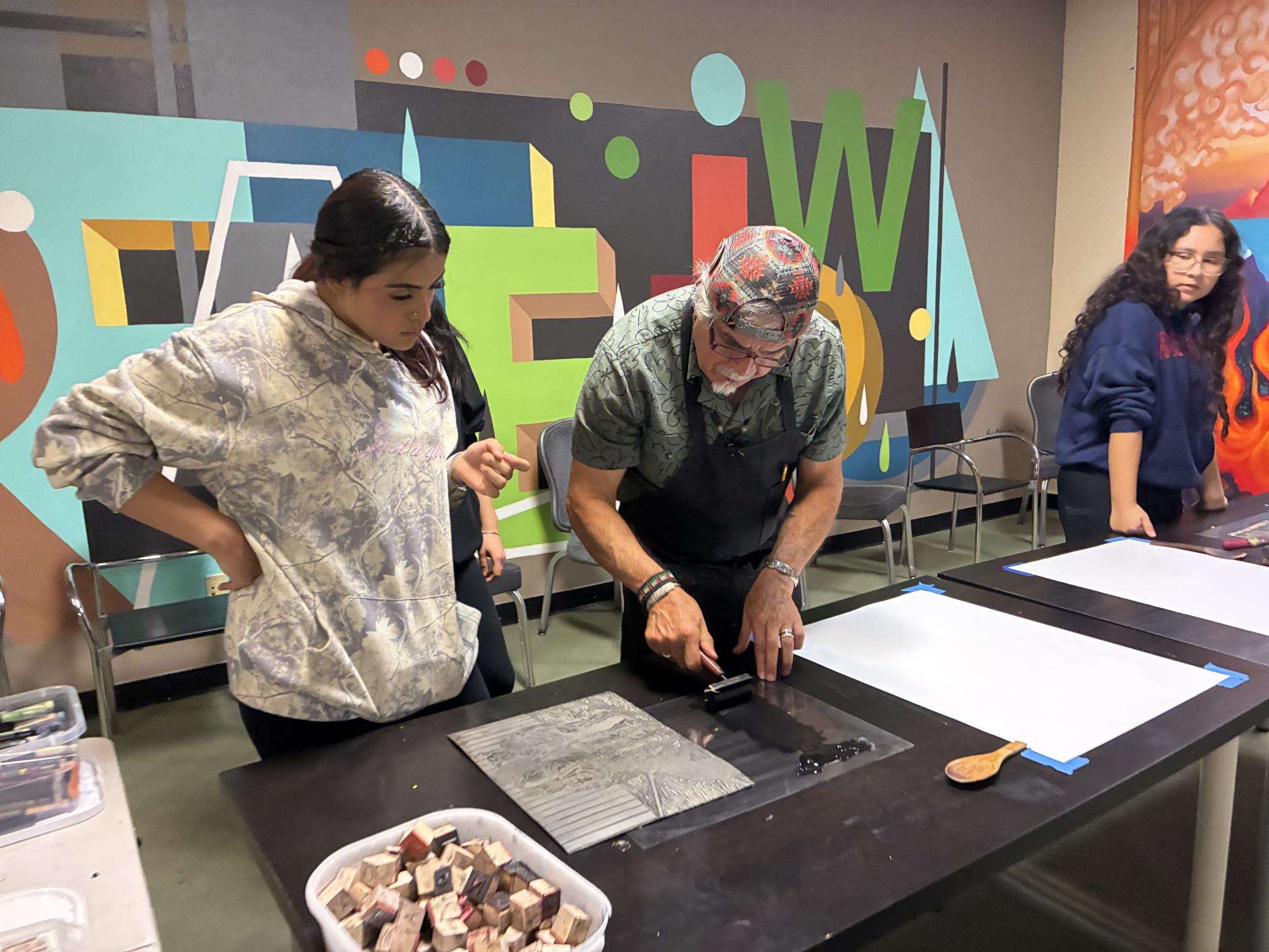
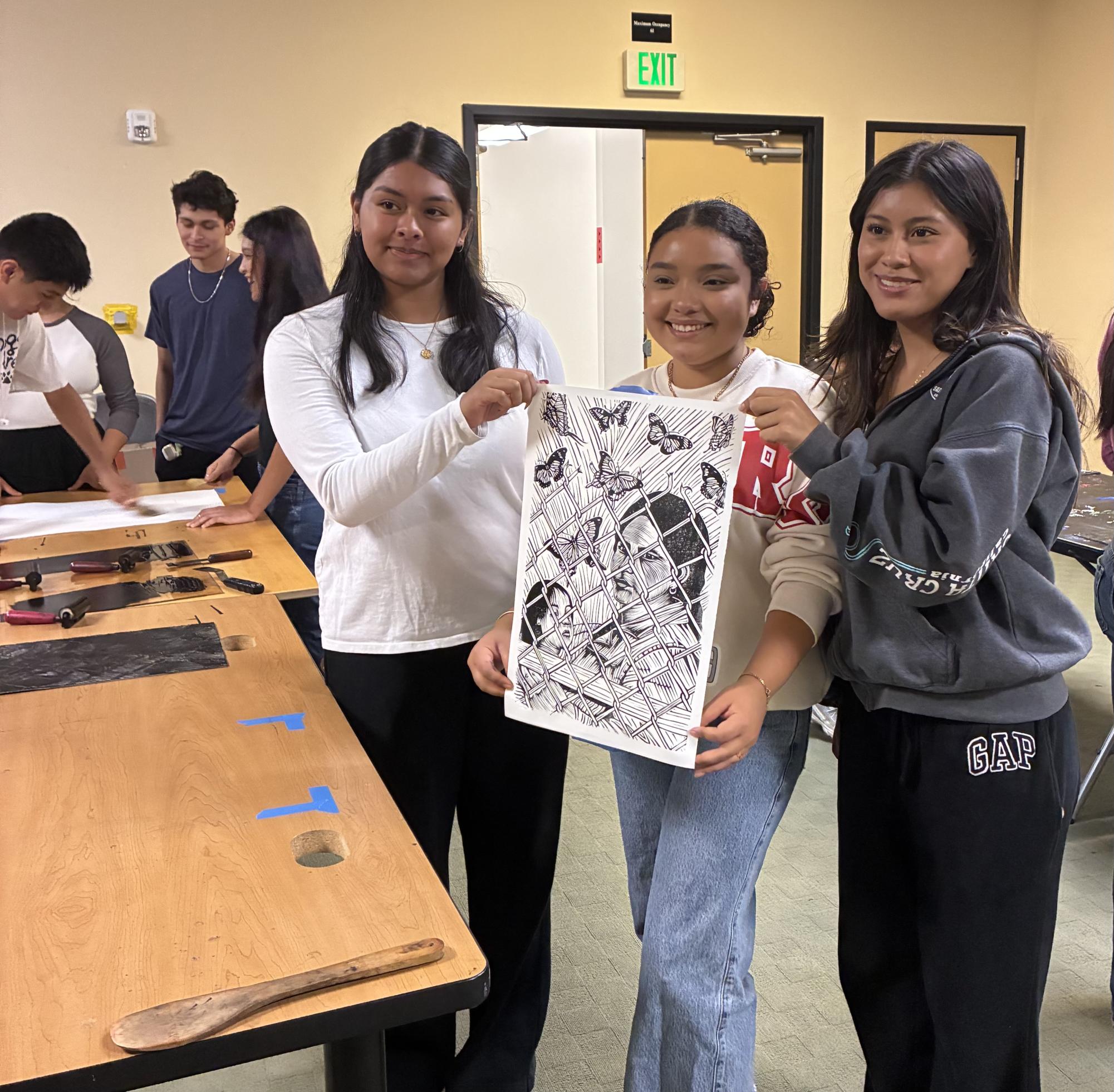
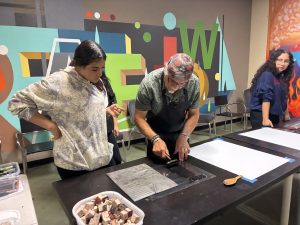
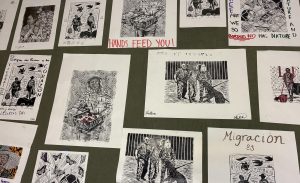
Students learn to make art during a workshop hosted by Local Art.
-
-
-
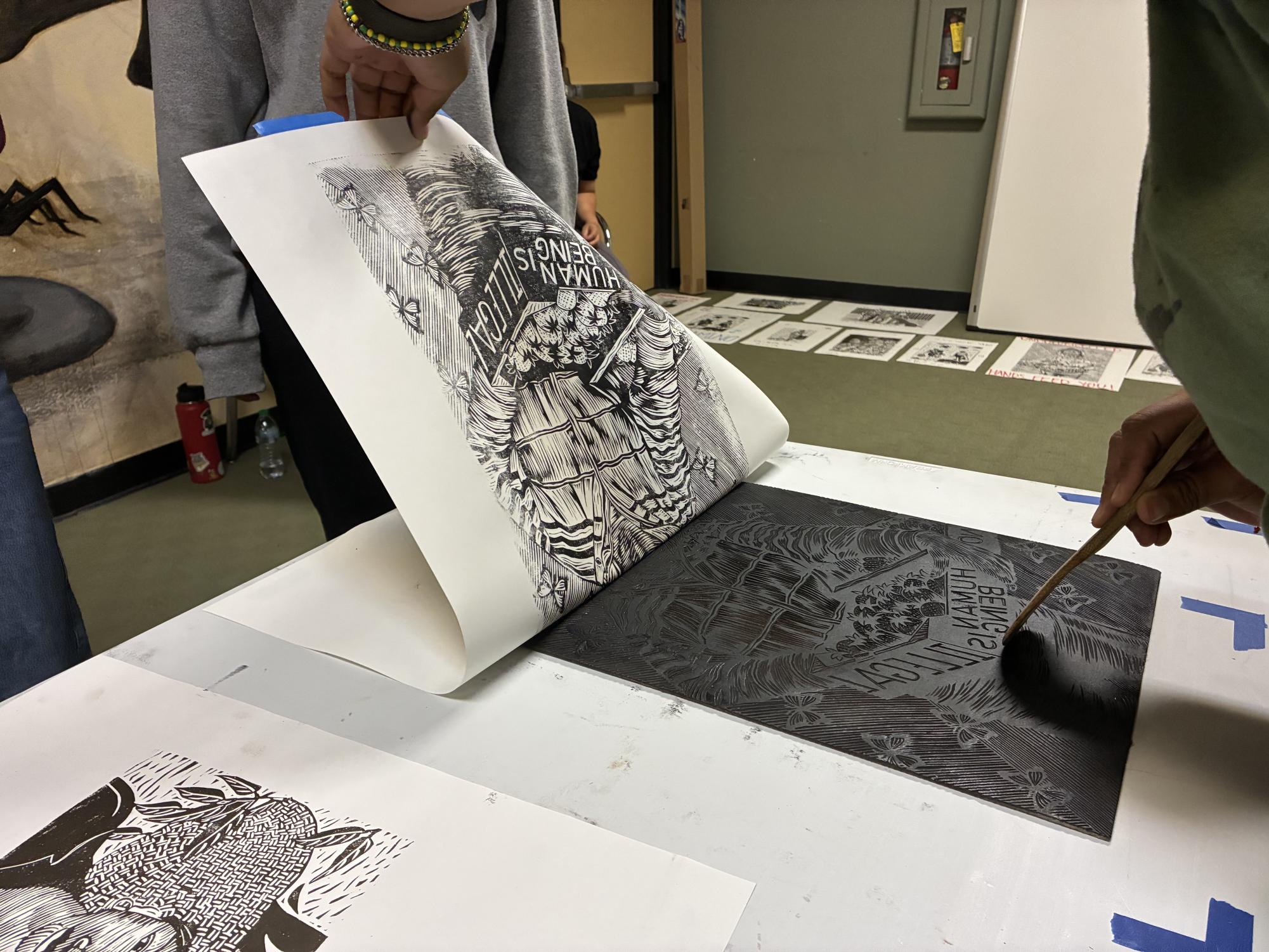
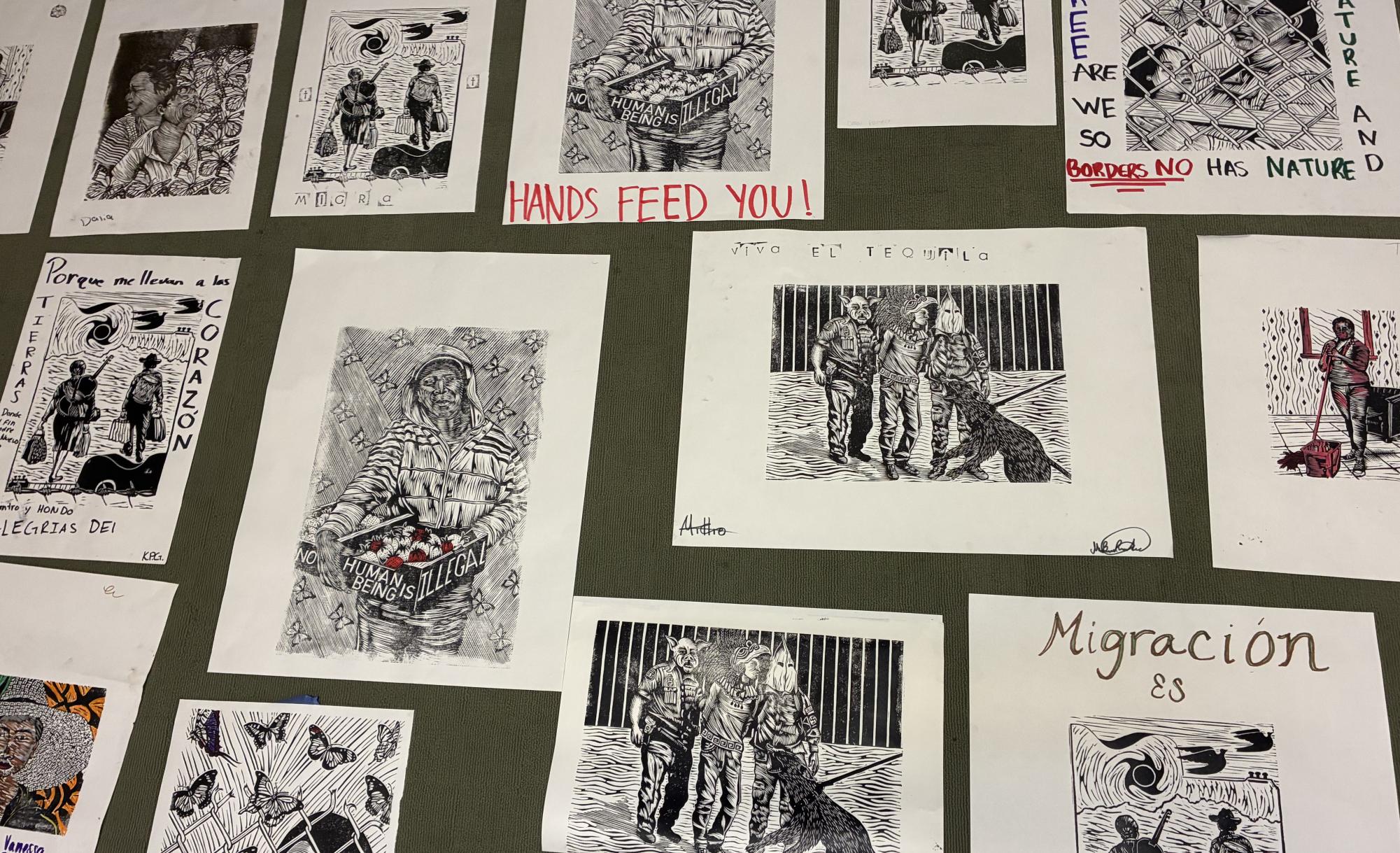
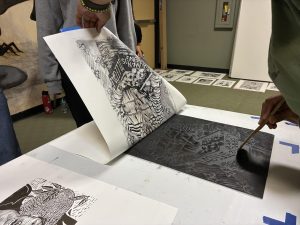
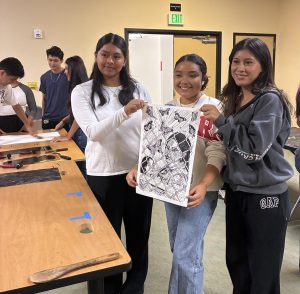
Students showcase the art they made.
-
Students create art in the printing workshop.
Around every corner of San Pedro Square lies beautiful walls of art. From murals on public health to water conservation to bits and pieces from hundreds of artists put together like a mosaic, it is truly a spectacle to behold. On Sep 10, Foothill College’s Puente cohort toured downtown San José for a mural walk and hands-on art workshop hosted by an artist-led nonprofit called Local Color that is dedicated to empowering creatives and transforming public spaces.
The visit offered students an opportunity to experience firsthand how art can bring communities together and preserve cultural identity while incorporating activism. The visit started with introductions at Local Color’s studio space, followed by a mural walk and a printmaking workshop led by Bay Area artist Juan Fuentes.
In addition to being a beautiful sight, student Samantha Virrueta Bravo enjoyed the calming aspect of strolling through the streets filled with art. “I liked how the mural walk was really relaxing, getting to walk around San Jose and then seeing all the beautiful artwork that people have done,” she said. “I also think it’s just really cool that we got to meet the person who makes it possible for all this beautiful art to be on the streets.”
Puente is a mentorship program here at Foothill with the mission of empowering underserved students to earn degrees. It aims to build community and academic success through embracing cultural identity and shared experiences. For returning student Marvin Hernandez-Flores, this year’s events have deepened the sense of connection that Puente fosters.
“The Puente program does a good job of really creating a space for first-generation students and the resources that help the mentorship,” he said. “I feel like everyone who’s affiliated with the program really has students’ interests at heart, and I think that’s really important right now. They’re changing up the way they do things with the cohort, because last year we didn’t really do tours or community stuff like this, which is really cool to see.”
Local Color’s message emphasizes the role of art in activism, as they are both inherently tied together. Hernandez-Flores reflected on how the Local Color visit tied art to activism. “Art isn’t just about what you see—it’s about what it brings out of people,” he said. “When murals are painted over or erased, people organize to reclaim that space. And when you add art, it can strengthen a community’s voice.”
“Art is not just tangible with what you’re seeing, but it’s also tangible in what it brings out of people,” he said. One space Hernandez-Flores noticed within San Jose State University made strides in making students feel represented in their culture by including more art and preventing those pieces from being taken down, such as when San Jose had painted over a historic Chicano mural. “That caused an educator to put together a group in a space, because he said students felt like their culture doesn’t matter after they saw art erased,” he said. “I think if you add art that just bolsters a community space.”
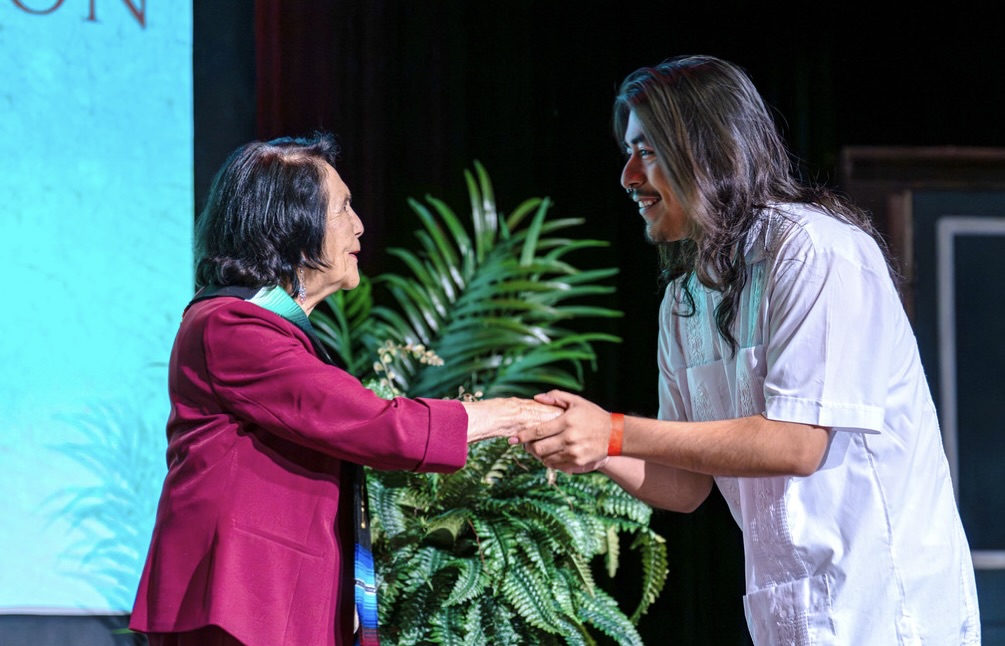
That philosophy lies at the heart of Local Color, which partners with artists to turn empty walls into public pieces. Executive Director and founder Erin Salazar said the organization strives to make art accessible while reminding people of its social power.
“I see murals as a tool for activism, because unlike a gallery space where you have to enter a threshold, or you sometimes have to pay a small fee to be able to get into it, public art is accessible to everyone,” she said. “It’s accessible to you, to me, to our mentally well and unwell, to our housed and unhoused residents. Just the act of influencing public spaces is a radical act of activism in itself, or just saying we are here.”
For both Local Color and Puente, art serves as a bridge to connect individuals to communities and showcase the stories and cultures of the people who live in them. By encouraging students to explore creative expression, the visit highlighted how identity and activism can thrive together.
As the day wrapped up, many students left inspired not just by the art they saw, but by the art they got the chance to make. “They just made the learning so interesting,” Virrueta Bravo said. “I’m not the most artistic person, but I had a lot of fun just doing that printing workshop. It took a lot of handwork, but it was pretty cool to see.”