

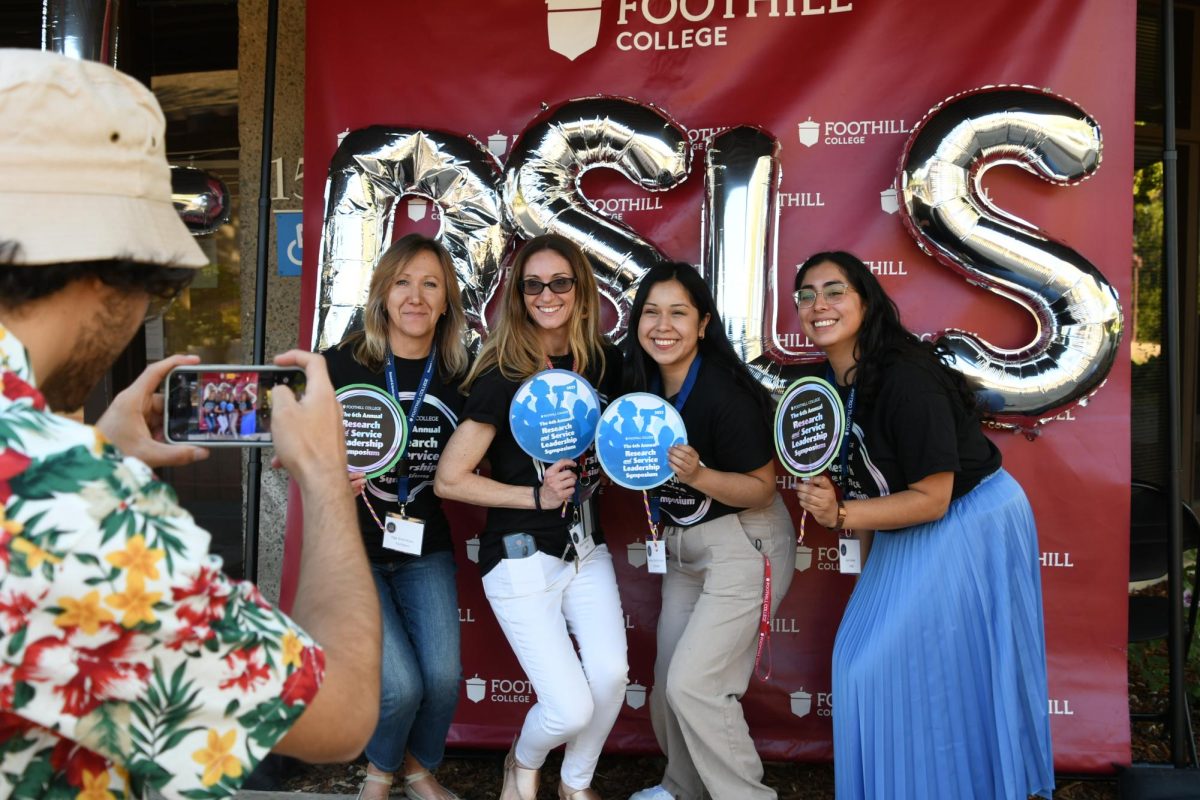



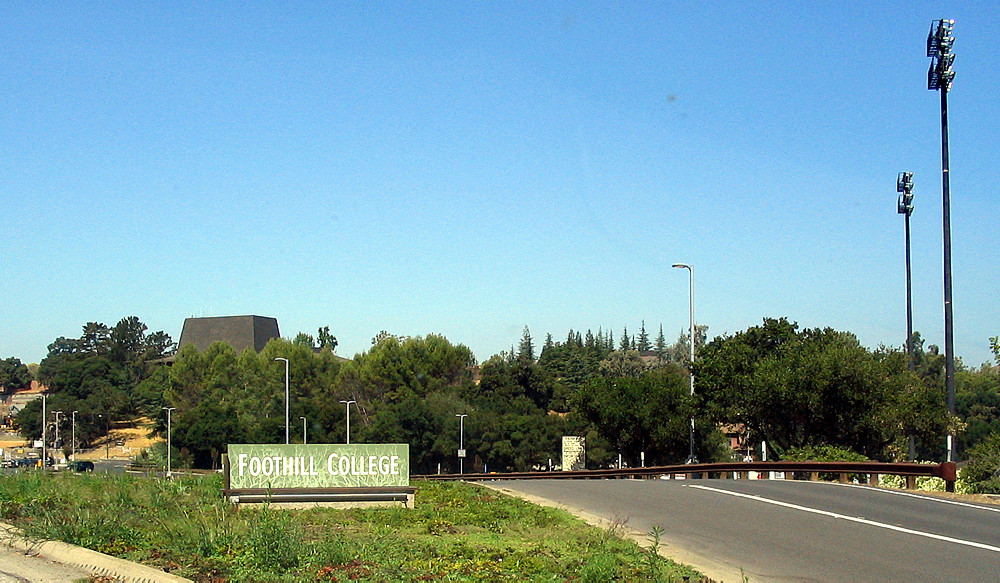


On Thursday, May 21, from 9 a.m. to 5 p.m., students from Foothill and a variety of other schools filled the campus to showcase their research at the 9th annual Research and Service Leadership Symposium (RSLS). This yearly event is meant to provide a space for students to create and showcase either individual or group research projects in any kind of field, from the creative arts to the sciences, with the ultimate goal of expanding learning beyond the classroom and celebrating student passion and curiosity.
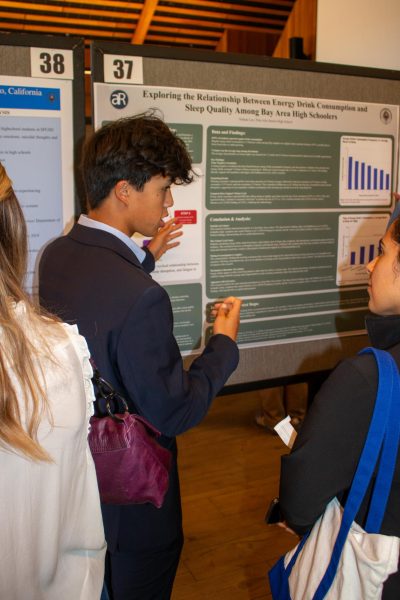
RSLS provides students with an audience of their peers and faculty members to present their work to get feedback on it and have the chance to win awards for it. Along the way in this in depth process to get to the main event, participating students are provided mentorship, in the form of classes, clubs, one-on-one work with professors, and workshops throughout the year.
The day is split into different sections of the event, including opening/closing ceremonies, presentation sessions, poster sessions, voting celebrations, and an awards ceremony. The awards presented include the following:
Judges Award for Excellence in Research
- “Ethnobotanical Anti-Convulsants for Seizures in Epilepsy: From Traditional Healing to Modern Lead, a mechanistic screening of Ziziphus jujuba in C. elegans” by Desiree Orque and Kaylee Witana
- “Social Media & Democracy: A Demand for Ethical Data Practices” by Mehreen Shaikh and Aavni Jon
- “Breaking Barriers in STEM” by Carlos Hernandez, Amber Rodriguez, Anysia Alvarez, Emely Guzman, Juan Lara-Nava, and Paulina Cabral
Judges Award for Excellence in Service
- “Adventures with Fran the Frog: Bilingual Stories in STEM” by Lillian Swedlow, Karla Veronica Serafin Medina, and Schyler Rueda
Judges Award for Excellence in Creative Art
- “Mine is the Region of Unthronéd Space: A Sonnet Series Reinterpreting Paradise Lost” by Ambra Gargini
Audience Awards
- “GloriAI AptaMonitor: A Wearable Non-Invasive AptaSensor” by Janelle Palomo, Juan Lara-Nava, Anysia Alvarez, Bryant Cervantes, and Cesar Villa
- “Adverse Childhood Experiences and the Protective Power of Relationships: Why Play-Based TK Is a Smart Public Investment” by Myra Dang, Brian Miller, and Olivia Lyon
- “Water Purification: Chlorella’s Potential to Coagulate Microplastics from Water” by Karla Veronica Serafin Medina, Desiree Orque, and Ariel Zhao
- “Rocketry for All: Cultivating a High-Power Rocketry Team through Design, Testing, and Flight of a Dual Deployment Rocket” by Alexandra Platon, Lehem Atsebha, William Dahm, Ian Parker, and Khang Nguyen
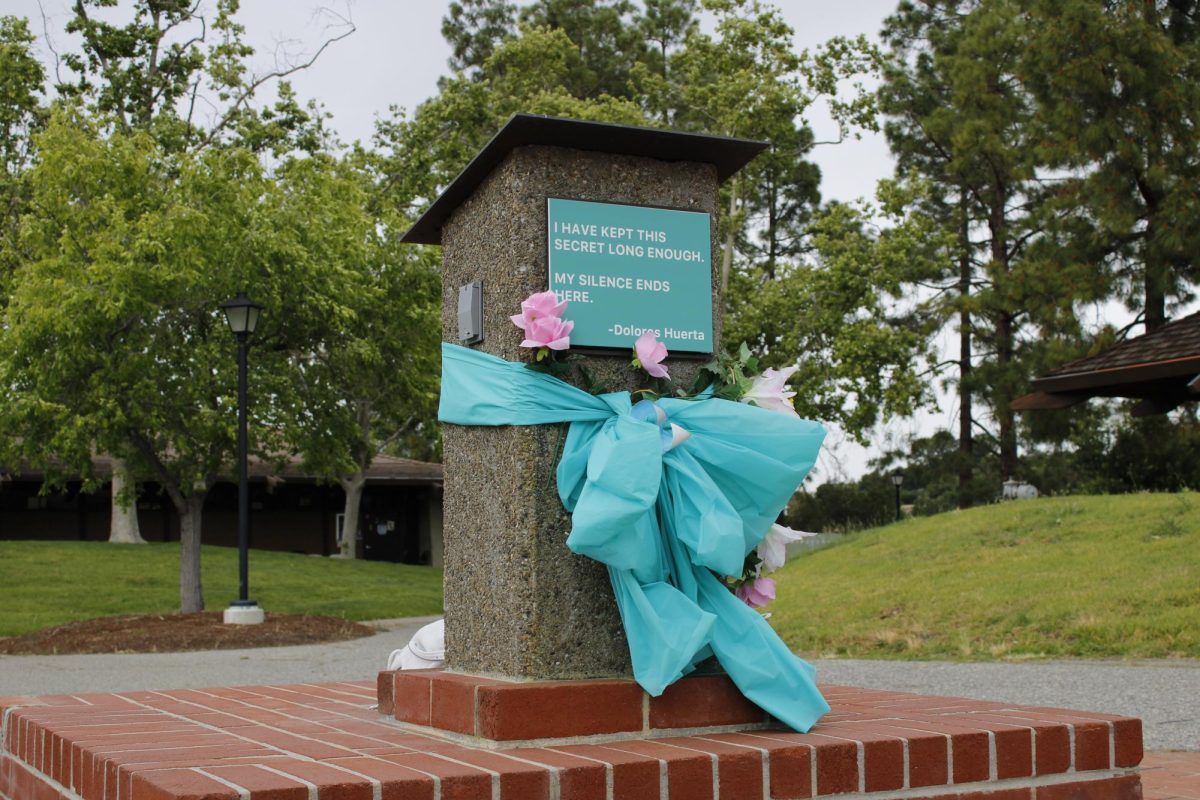
- “Confronting Femicide in Mexico and Beyond” by Ximena Toscano and Nathan Segars
Opening Ceremony
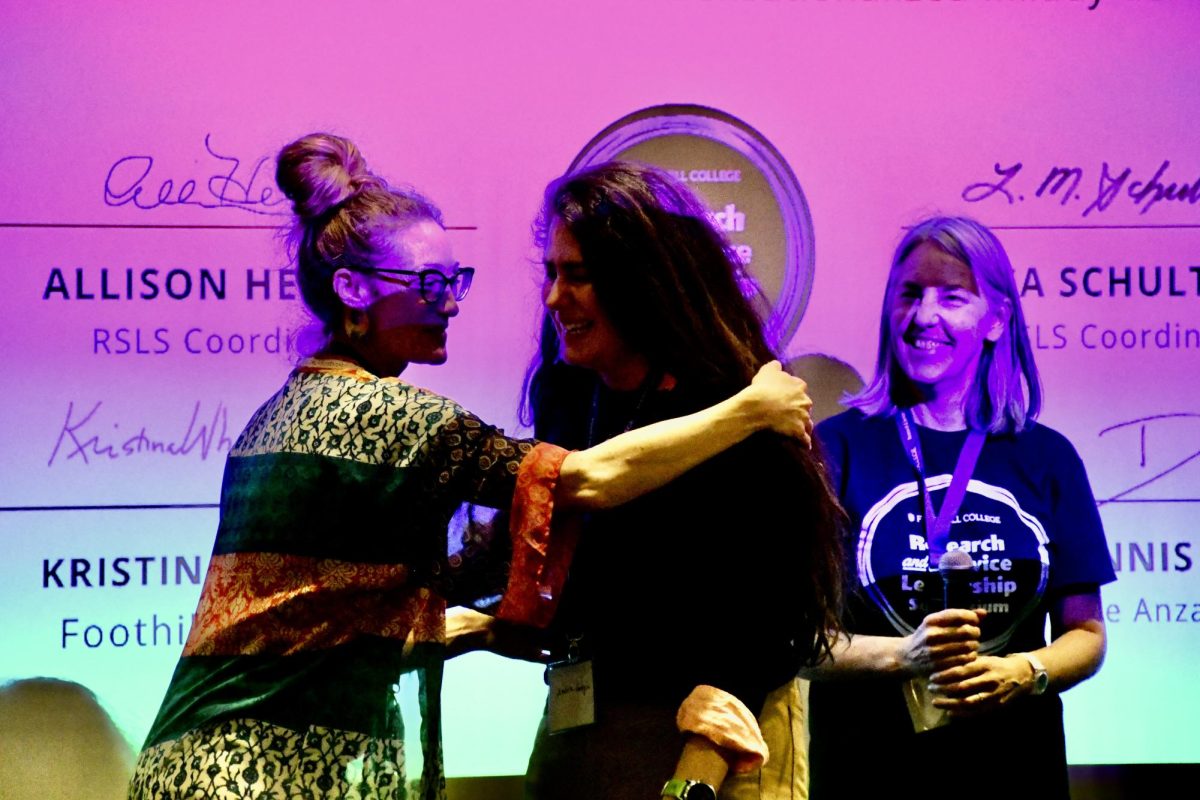
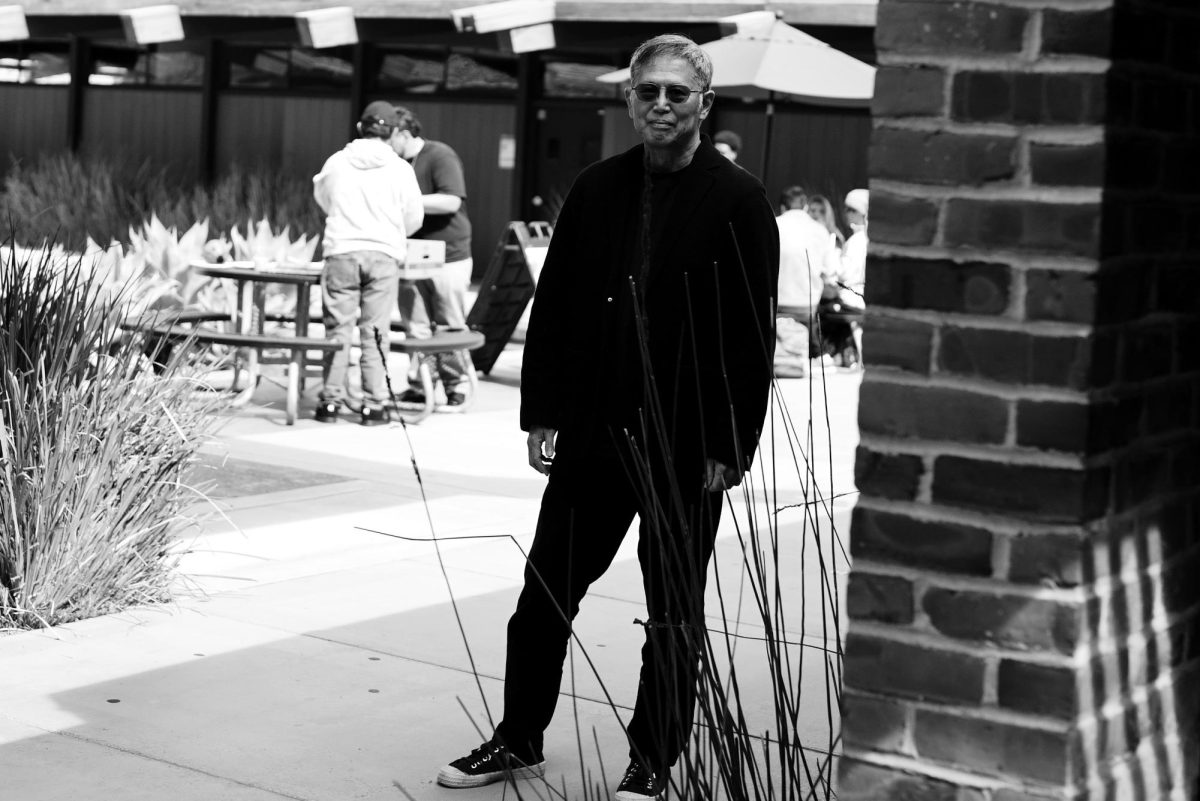
The day started off at 9 a.m., people at Foothill were greeted by Allison Herman and keynote speaker of the year, Ahmed Mostafa. Throughout his speech, courage was the glue of it all. “I want to congratulate the students here today,” Mostafa said. “What you’re doing is not small. You’re sharing research, service, art, ideas, questions, and pieces of yourselves to the community around you. And that takes work. It takes discipline. It takes preparation. But more than anything, it takes courage.”
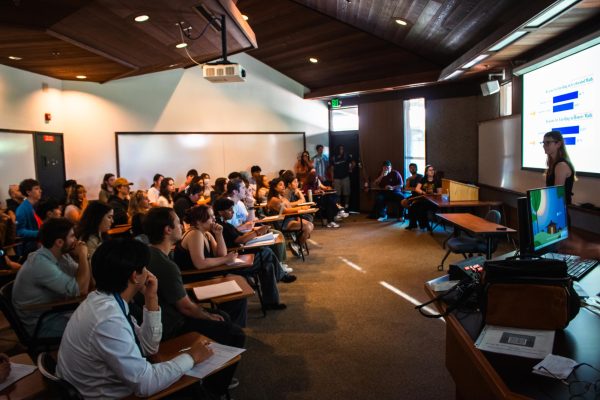
Mostafa took three of his own life stories to expand on this idea. First, he talked about his experiences at Foothill. Starting off as an engineering major because of the expectations around him, he later became a political science major by choice and got involved in student government. “It was actually about choosing myself,” Mostafa said. “My parents didn’t like it. They were just like, ‘what are you going to lose? There’s this path, this is the right path for you.’ But for me, that moment changed because Foothill became fun.” After getting involved with student government, he was able to help save the writing and language center from budget cuts. Despite this, he failed to get accepted to most UCs, due to technical errors most of all. Finally being able to get into Santa Barbara, Mostafa said, “You think you want to write a script for the rest of your life. But life pushes you in a different direction.”
For the next story, Mostafa was on a ship in Egypt with his family. In order to show that he’s brave, he wanted to jump off it. But on that one day, he simply couldn’t, which led to him feeling immense guilt. He told his dad and cousin. “I [then went to] the captain of the ship, and I’m like, I’m such a coward,” Mostafa said. I couldn’t jump.” The captain however told him, “We were about less than five feet above coral. If you would have jumped at first, you surely would have died. Or realistically, severely injured.” Mostafa joked how this story was the inverse of the previous one, yet still rests on the power of knowledge. “How many times are we not gifted the knowledge that something that happened to us that was bad actually pushed us in a different direction?”
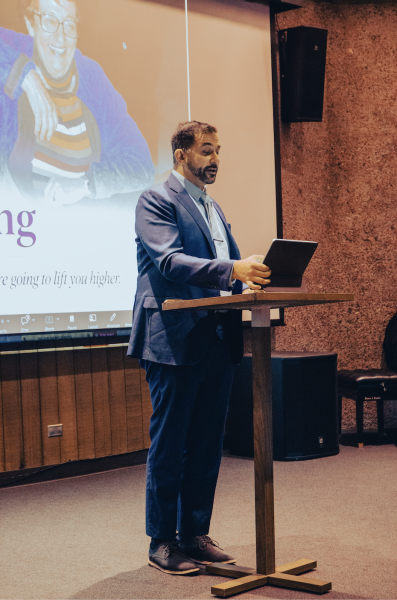
His final story was a somber one, detailing his struggle with depression and talks of this one instance while exercising. “I got three text messages,” Mostafa said. “One, that I was going to get something similar to a promotion [at] work. The second text was [that] I was going to be invited with this amazing panel of Bay Area mayors. And the third was [that] I was going to be put on a mass email taking, recognizing me from a vote of work. I remember crying because I couldn’t feel happy. Sometimes, life hits us hard.” In spite of this, he noted that “I still allowed myself to feel what I was feeling. But I recognized what my purpose was; I recognized that I made myself a promise that one day I’m going to feel it.” In the end, he said, that happiness is the journey, and that it must be “steady” most of all.
Before leaving, Mostafa told the audience that courage is, “about recognizing [that] maybe I don’t know what I am, but I’m going to be true to who I am, because you know a part of who you are.”
Reporters from The Script attended the RSLS poster and presentation sessions to better understand and showcase the kinds of topics that students explore. The Script will detail some of the featured projects that caught their eye at each part of this event.
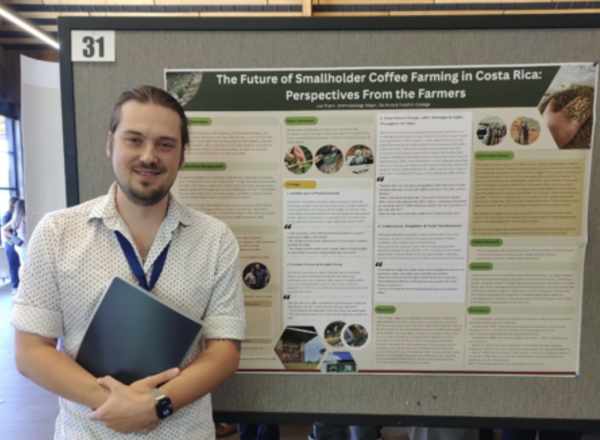
“The Future of Smallholder Coffee Farming in Costa Rica: Perspectives From The Farmers” & “Star Eater: What We Swallowed To Be Seen.”
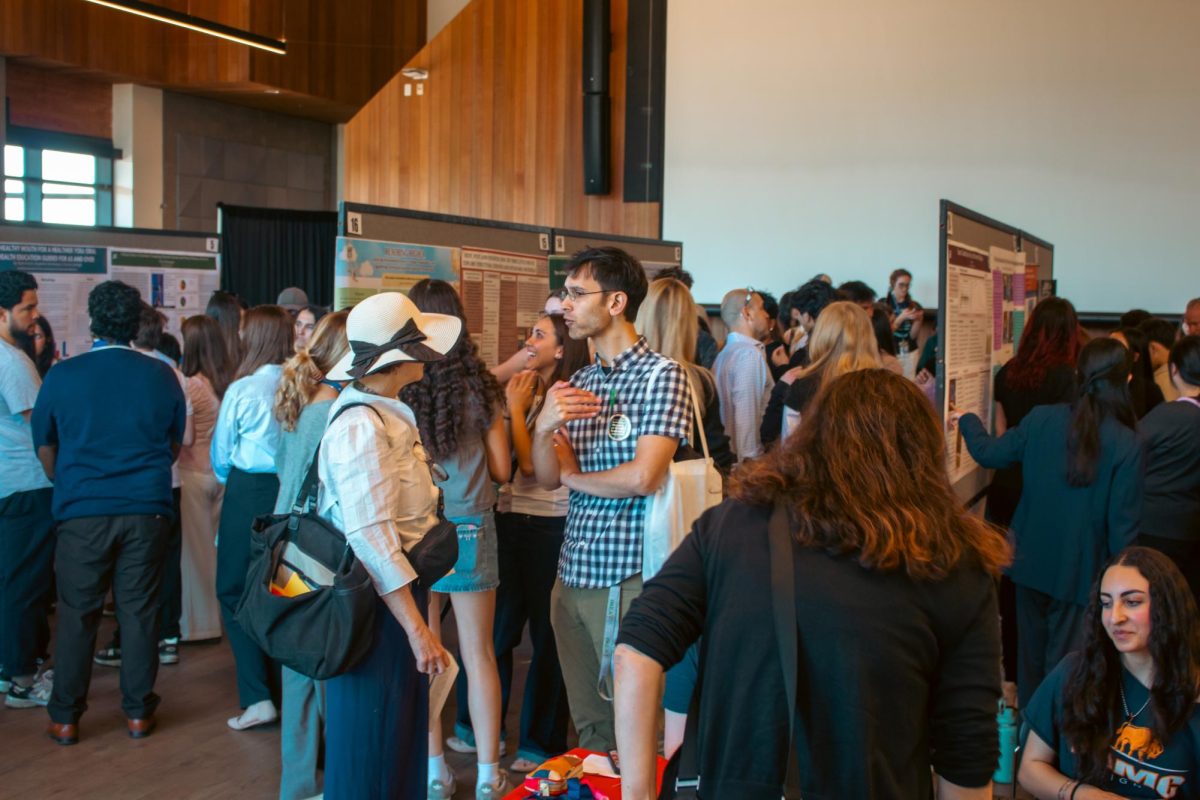
The RSLS Poster session ran from 10 a.m to 3 p.m. in Foothill’s Dining Hall. Student presenters stood in front of their posters, speaking animatedly with visitors. During my visit, two exhibits in particular caught my eye—one creative and one research based. Joe Praml spent two weeks in Pérez Zeledón, Costa Rica at his father-in-law’s coffee farm. His project, “The Future of Smallholder Coffee Farming in Costa Rica: Perspectives From The Farmers,” focuses on the realities of smallholder coffee farming. The work is grueling, doesn’t pay as much as it used to and the industry is slowly falling into larger corporate hands. Joe goes back to Costa Rica often, and aims to continue his research into this topic in the future. Excitingly, he was a finalist in RSLS.
My curiosity was piqued by the title of another project, “Star Eater: What We Swallowed To Be Seen.” Created by middle college student Joanna Liu and high school student Azuki Radhakrishnan, Star Eater was designed to be a children’s book as a metaphor that details the emotions of feeling “not enough,” to the point where we may “swallow stars.” Liu aims to make mental health more accessible and digestible, and for kids to know that these emotions don’t have to be demonized. This is her second time presenting at RSLS, and this time around she wanted to do a creative project. While she is a STEM major, she dreams of being a children’s book illustrator. I personally really liked the art in the story, and there were some hard hitting lines in it. I wish I could’ve taken one of the samples home with me. Fingers crossed there will someday be a version released for the public! Wandering around the rows of posters that were the results of weeks and weeks dedicated to research, art, and assembly, it’s clear that Foothill’s RSLS showcases real passion, effort, and creativity.
“Bio Markers in Autism” & “Social Media and Democracy: A Demand for Ethical Data Practices”
Bio Markers in Autism, by Sorrel Tunkelang, was an in depth project and presentation on the importance of understanding and defining both physiological and psychological factors in autism. A better definition and understanding of autism can help with earlier diagnoses in children leading to early childhood support. The project talked about the complexity of autism spectrum disorder and what changes in the brain cause it to occur. I particularly remember the word basal ganglia which is a part of the brain. The over pruning and under pruning of this part in the brain is what leads to various disorders including ADHD, OCD, Tourette’s syndrome, as well as autism spectrum disorder. The presenter was also very clear to debunk the conspiracy theories that autism is caused by vaccines and/or Tylenol.
Social Media and Democracy, presented by Mehreen Shaikh and Aavni Jon, talked about how social media companies use data collection to keep people hooked on social media platforms. This data harvesting is used for such things as targeted advertising but also to push what users ideologically think. They brought up three important pieces to controlling users on social media, which included: distraction, surveillance and censorship. Distraction through unrelated or inflammatory events keep masses distracted from important global or national events. Surveillance is achieved through selling data to companies like Palantir and agencies like ICE to build profiles on civilians and track their exact location. Censorship appears in the form of what terms get flagged and through content moderation.
Overall, it was neat to see presentations cover topics that might not be well understood by the public and shed light on why it is important to learn about topics that we might not think impact our daily lives but actually do. Even though they were on two topics that may seem worlds apart both touched on the importance of deconstructing disinformation in our current day. Everyone put a lot of work into researching their topic and were clearly passionate. The audience seemed to see this too and even though it was a hot day they stayed seated and ready to listen.
Finalist Feature: “Othering at the Heart of Conflict: From the Historical Crusades to the 21st Century.”
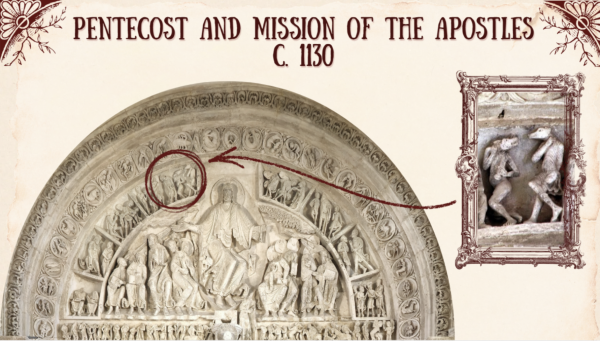 After RSLS, we had an opportunity to talk to one of the finalists, Vivian Hanna, who presented “Othering at the Heart of Conflict: From the Historical Crusades to the 21st Century.” A 4th year Foothill student, Hanna has always seen RSLS and thought about joining, but never presented until this year. She was inspired by a tympanum, or the artwork seen above the door of a church. Hanna explained, “We have the “othered” individuals and Christ literally going to say go and fix them through evangelizing.” The “othered” individuals presented were represented by humanoid looking creatures outside of the protected area around Christ. She compared it to the modern day, saying “it’s all so familiar, it was how long ago and we are still doing this sh*t..”
Hanna mentioned how the conflicts in the Middle East connected directly into her research. In a slide shown during the presentation, Hanna included images posted by various sources trying to either justify and validate the war with imagery of the crusades. She started off research on “white supremacy on the internet through stormfront,”—Stormfront is considered to be the first major hate site on the internet after being founded by former Alabama KKK boss Don Black. Hanna also explained how she researched “the origins of white supremacy on the internet through 4chan.” That also led her down a path of researching medievalism, the redpill, and the right wing and “a false idea of what the crusaders were.” During her research, she noticed that “There were a lot of papers just simplifying the crusades and pushing their idea of what the crusades were and a lot less giving an accurate representation of the crusades and representing what they were.”
The preparation led up to the night before her big presentation. One slide in particular, showcasing AI examples posted by various government officials went through seven different interactions. Hanna said “It took 4 months because I wrote a lot as I felt personally passionate and I probably ended with like 56 sources.” She also explained how she needed a friend to help tell her what needed to be cut out as she had way too much research put into the papers behind her presentations.
When reflecting on her experience, Hanna mentioned how “The workshops are all super helpful, they were a great resource for me, and my professors were all really helpful.” She also said that even though RSLS is dominated by STEM subjects, that doesn’t mean that the people with more non-STEM based ideas should not compete.
Her presentation was captivating to the wider audience. I also had the opportunity to talk to someone after seeing her present. Quinn, one of Hanna’s friends and fellow Foothill student, explained how Hanna’s presentation was “Something I’ve understood (previously) but this presentation helped me see it concretely.”
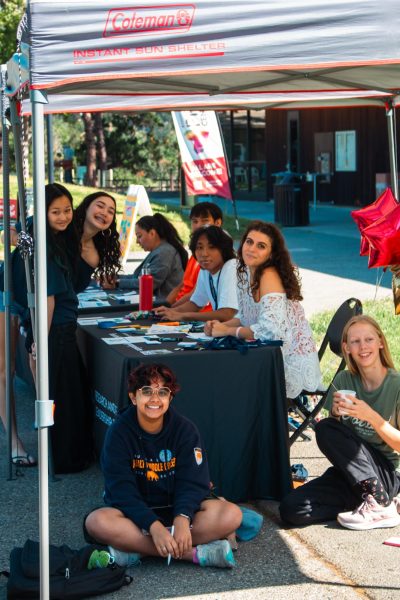
Vivian mentioned how fun it was participating in RSLS and that if anyone has an idea they are passionate about and has “ something behind it” they should participate. Whether you are presenting a poster on a child’s book you have created, or you want to talk about the lasting effects of the Crusades on the modern day, RSLS has a place for all students looking to share their ideas with a broader audience.
Closing Ceremony
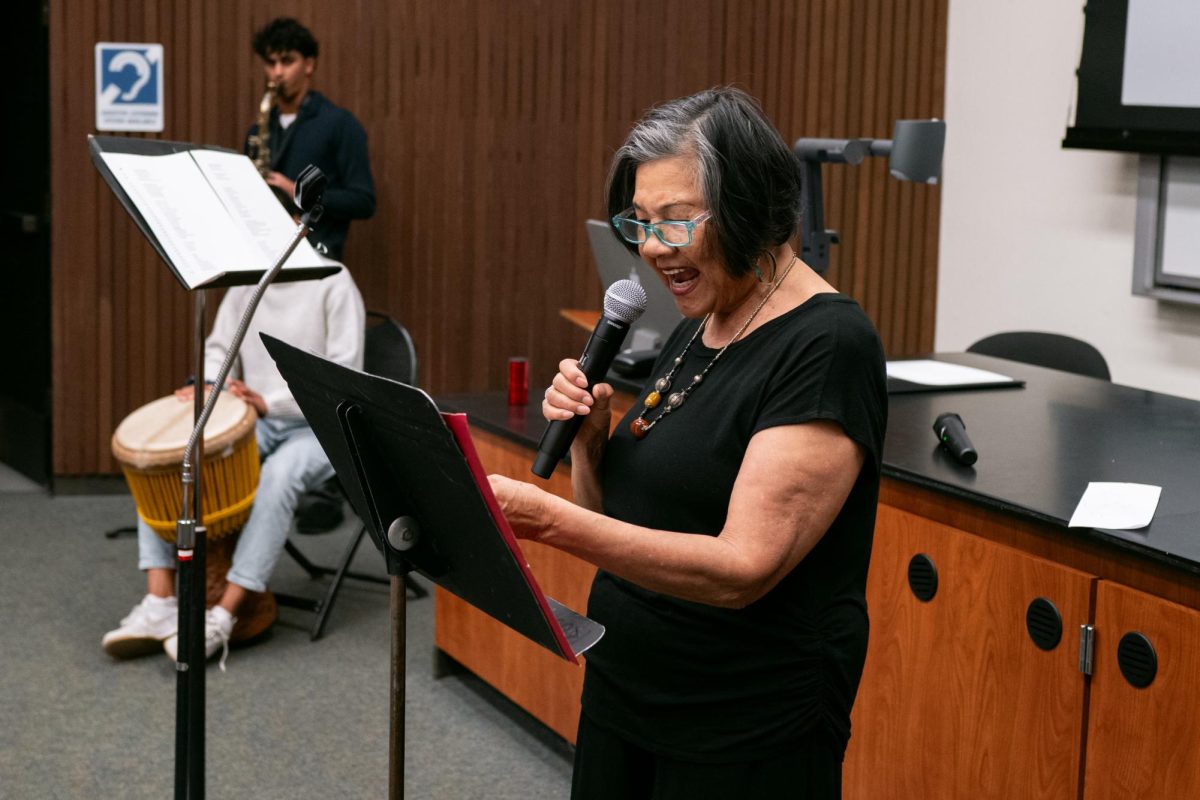
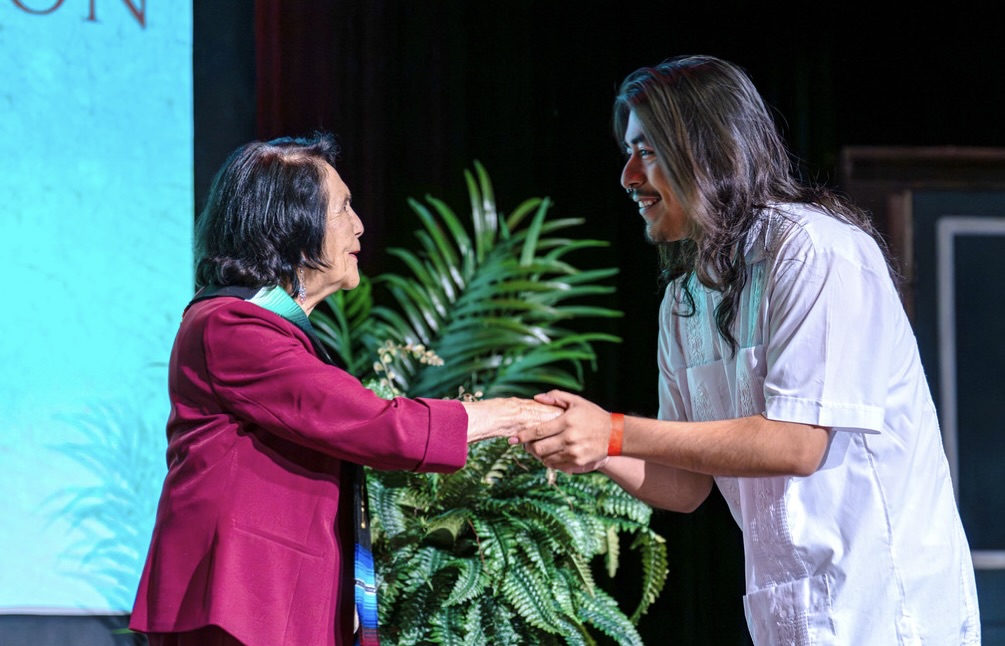
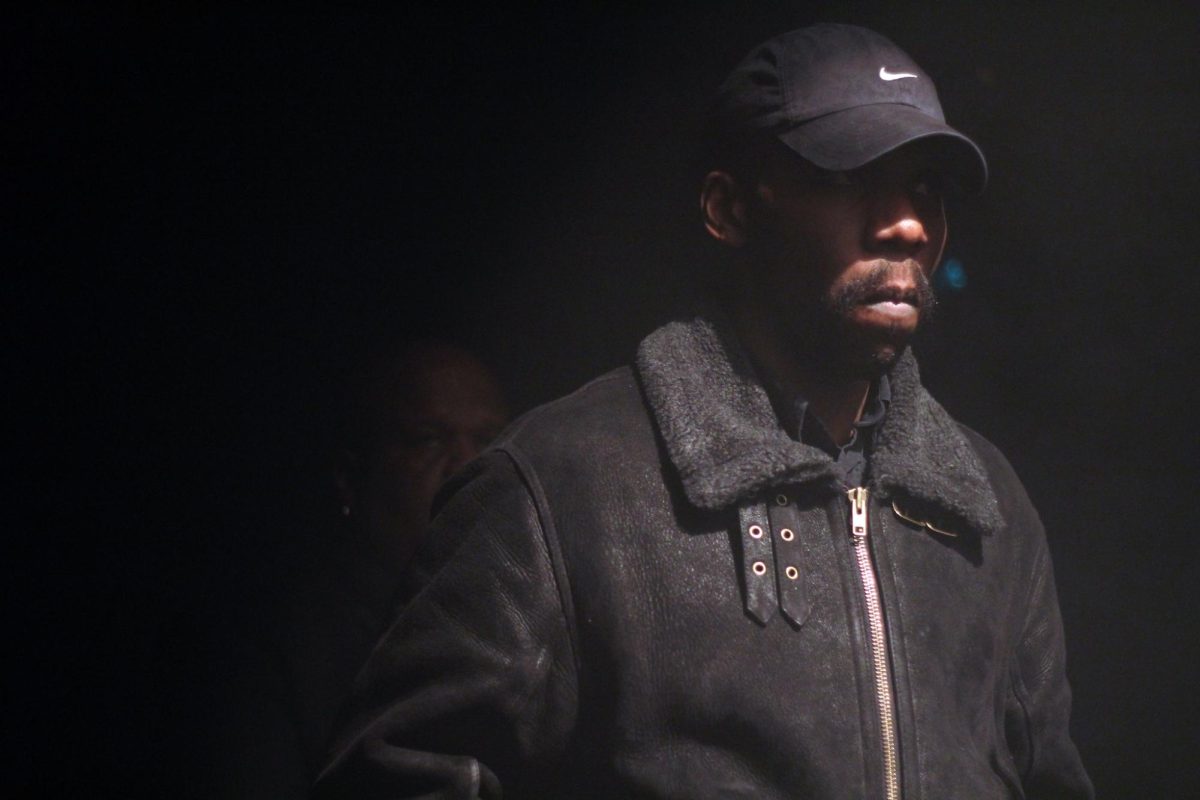
Before the final ceremony started, there was some live music played by Foothill Beats, a cross culture drumming club, outside of the Smithwick Theater. The main ceremony started an hour and half after all the presentations wrapped up, beginning with a small talk from Herman along with a live performance of some poetry performed by Foothill’s very own librarian, rapper, and poet, Jeremy Peters. Following up these performances, they announced the finalists and winners of the awards for RSLS. Congratulations to not only the winners, but also the finalists and all the other presenters as well, as there were so many interesting topics showcased this year.
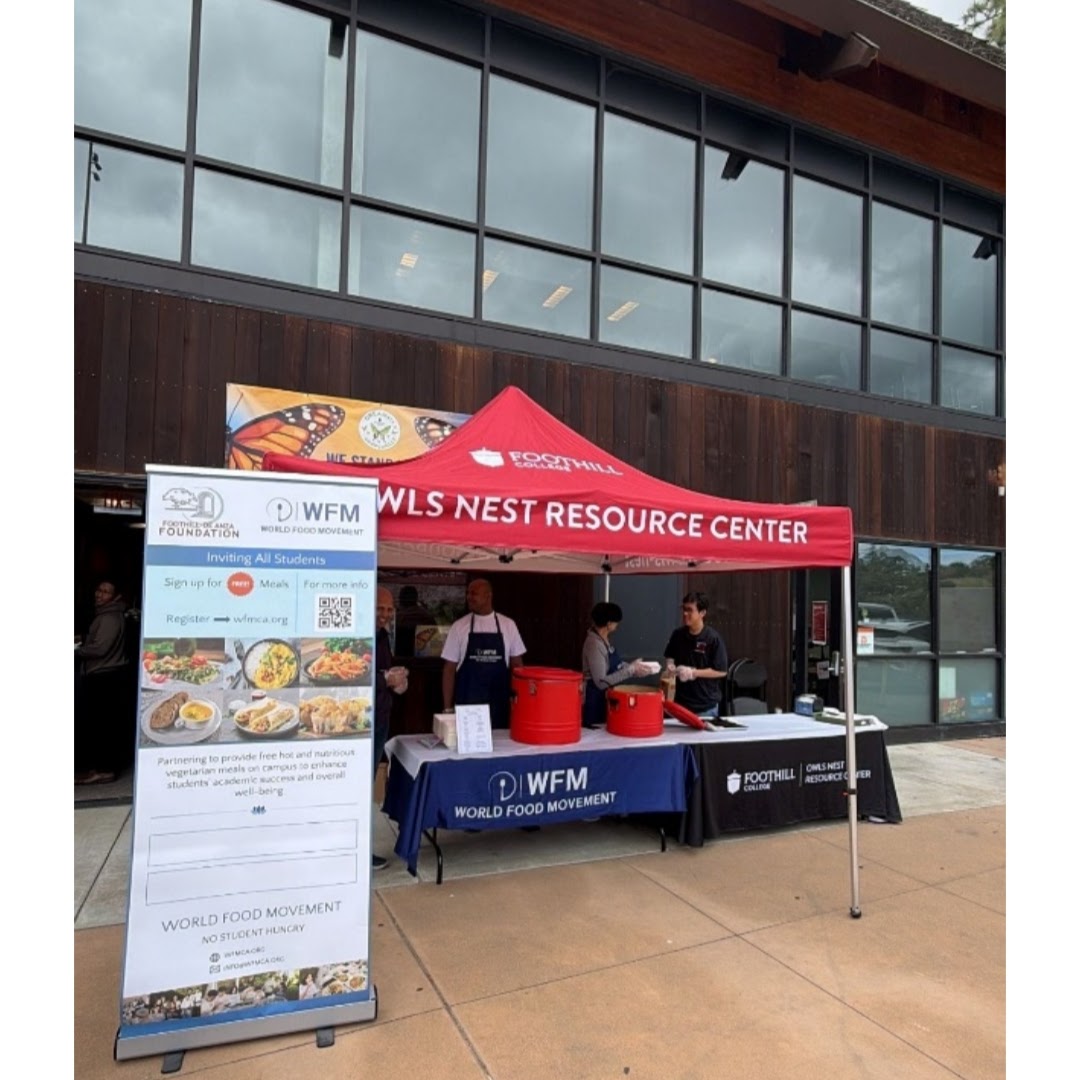
Vivian Hanna
Jun 18, 2026 at 10:45 am The Foothill Script Pick
Great article guys! Thanks for summing up some of the presentations I also found intriguing but didn’t get a chance to see!