


America is often perceived as a country where one can achieve anything, so long as they put in adequate work. More than ever, this idea of personal freedom is being taught to American children not just by society, but also directly from their schoolteachers. However, at some point during their K-12 school experience, many students undergo a stark shift from dreams of being an astronaut or professional athlete, to a focus on wealth and monetary success. American society’s obsession with “achievement culture” has had a profound impact on how Americans define success, particularly among Asian Americans. Dr. Scott Tsuchitani (known to his students as “Dr. Scott”), a Japanese American with a PhD in cultural studies, has experienced firsthand how an obsession with success affects both himself and the people around him.
A relatively new faculty member here at Foothill, Dr. Scott strives to create both an inclusive and liberal environment in his classroom, values which are reflected in his education. Professor Tsuchitani’s most recent academic achievement is his PhD in cultural studies, the experience from which he uses in his work as a scholar of Asian American art and culture. This degree, along with master’s degrees in mechanical and bioengineering has given him a significant amount of experience within the American education system. Originally an engineer and patent co-author who worked on biomedical devices like heart catheters, Dr. Scott sought to transform his identity later in life. But why?
At a young age, he experienced the prejudice that non-white Americans faced in the 1960s. A third generation Japanese American, Dr. Scott explained how his parents were incarcerated for being Japanese during WWII. This dark chapter of his family’s history inspired his documentary, Meeting at Tule Lake. Despite being born in Berkeley, he recounted that he had to grow up in Walnut Creek, “because of the effective redlining that was still in Berkeley at the time.” The bigotry he faced at a young age would become something that as a doctor of cultural studies, he would explore and advocate against. However, before discovering his scholarly side, Professor Tsuchitani went into a field which he knew had great potential to bring him success: engineering.
His environment would end up having the biggest impact on this career choice. “I was more comfortable with STEM classes in high school, even though I was getting A’s across the board,” he explained. “Because I felt like there’s a right answer you could count on to back you up.” However, affinity for STEM-related subjects was not the only source of his direction. When asked about his parents’ influence on his career choice, he described how his friend had wanted to be an architect, but his parents told him not to. Dr. Scott related to that, saying, “I’m in the same position as him with my dad.” On the surface Dr. Scott’s mother and father seemed open to his personal choices, but when he would ask about specific paths like architecture, the subtext would show itself. This is where achievement culture begins to work its way into the world of a teen or young adult, as in order to be considered “successful,” society’s expectations of working towards financial stability, security, and prestige must be met.
Careers centered around personal passion, unless related to degrees associated with higher pay, are often considered unbecoming and unattainable particularly for Asian American families. This pressure from immigrant families and communities to enter fields which will bring financial security may stifle academic passion. Many feel as though knowingly entering fields that generate lower-income is a disservice to past generations who had to sacrifice their own dreams in order to ensure the next generation had a shot at the American dream, which comes at the detriment of many young workers’ mental health. As they age, these model members of the workforce feel as though they are wasting time doing something they feel little passion in studying or happiness in performing.
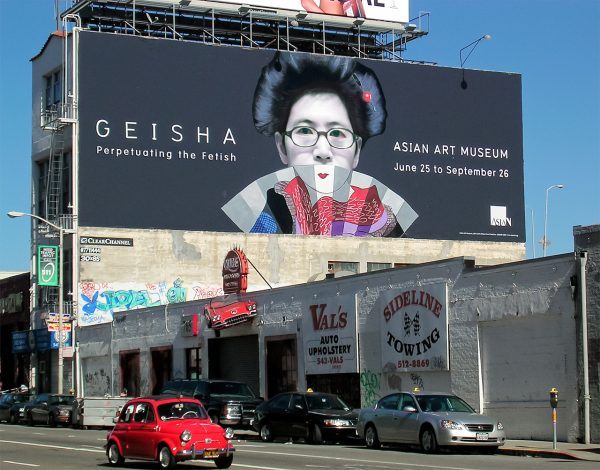
Memoirs of a Sansei Geisha: Snapshots of Cultural Resistance.
Dr. Scott described the emotional aspect of how, years after his career switch, he attempted to re-enter engineering after being unable to make ends meet as an artist. He also describes how his work as an engineer felt as though it lacked deeper meaning. The switch challenged societal expectations greatly, as even though he was no longer attaining monetary success, he found spiritual success. In order to challenge achievement culture, he needed to find meaning that was not ascribed to society, but to himself. “The whole idea of going back… was like a panic attack,” he said. “It’s like emotionally, I couldn’t.”
Many would say that Dr. Scott’s medical research and work on heart catheters is a great contribution to society, and that these contributions should be celebrated regardless of how the researcher feels about his work. However, Dr. Scott feels that his current work contributes much more to society than anything he did in the past. His documentary on the Tule Lake concentration camp, which provides perspective on the Japanese American experience, along with his work as an art scholar creating satires on stereotypes such as geisha and samurai, seek to provide awareness and identity to a community that was stripped of its heritage by the establishment. “I think in terms of what I’m doing here, it’s to get that critical thinking going,” he explained with conviction. “The liberal arts are so crucial, because that’s where you have this capacity to understand nuance and how the world works.” By changing personal definitions of success based on personal values, many more satisfying career opportunities may seem more important than before. His current personal values reflect his identity as a third generation Asian American over his identity as a person in STEM. He said, “Success itself isn’t the issue, it’s how individually we define success for ourselves.”
Dr. Scott is a perfect example of how passion can be turned into a career in the face of overwhelming pressure to conform to communal and societal expectations. More than anything else, he stresses fulfillment and purpose over traditional definitions of what success is. As he explained, the purpose he chose was to better the world by investing time and research in the liberal arts and in furthering society’s critical thinking skills, “because if everyone just has jobs to make money, what kind of world are we going to live in?”




blewis
Mar 12, 2026 at 4:34 pm The Foothill Script Pick
“Dr. Scott” is amazing!! We recently attended his class for a zine making workshop, creating amazing mini-zines representing ourselves and our struggles. We’re fortunate to have his experience here at Foothill. Take his class!!