

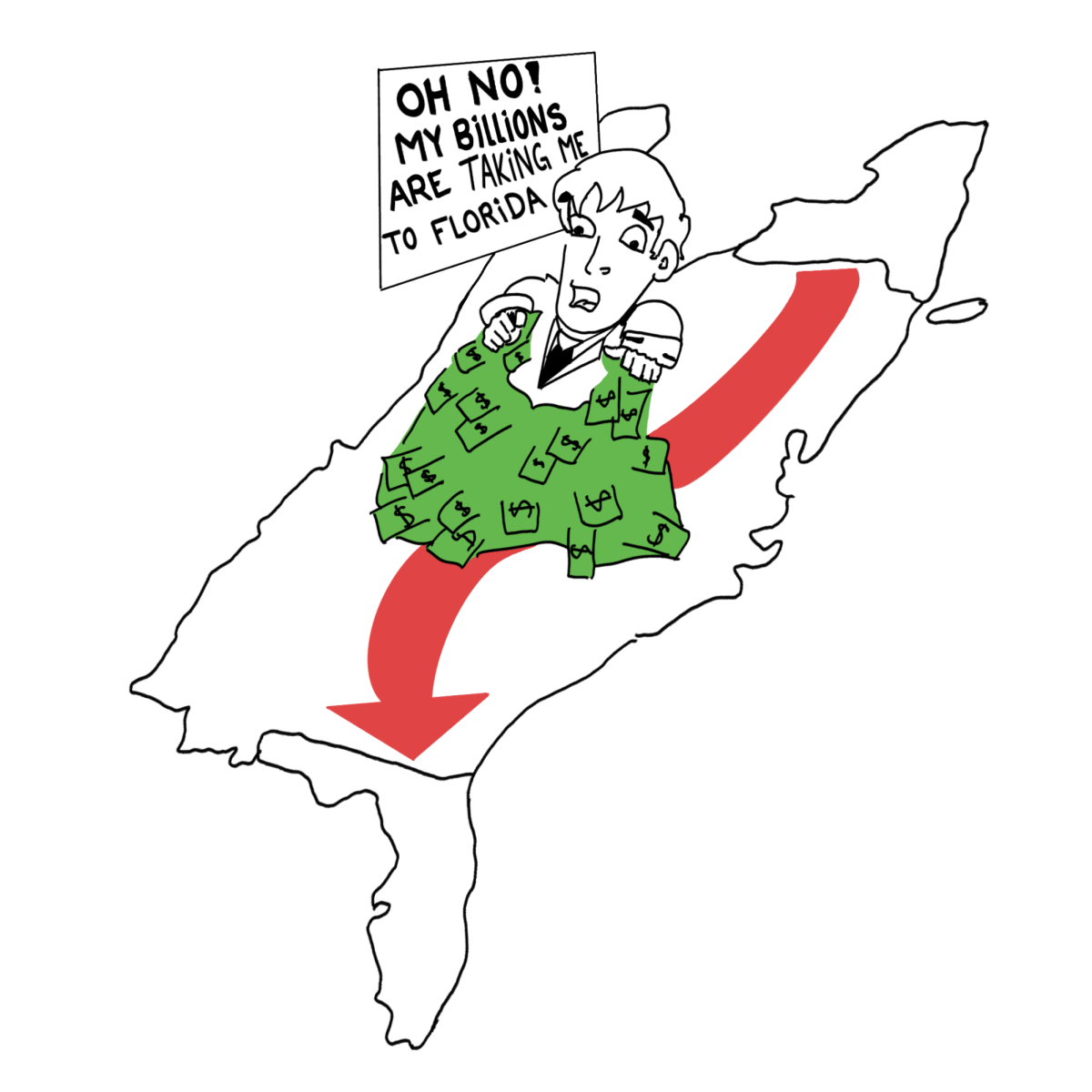



















































If you live in California, you’ve probably heard of the billionaire tax. It’s all over the place — In the news, in local politics, even here at Foothill College. It was the standout initiative in the slew of initiatives voters are asked to support every year in California, before being voted on in a referendum during the General Election in November. Started and sponsored by the United Healthcare Workers West, this bill hopes to alleviate massive cuts in healthcare caused by the “One Big Beautiful Bill Act” (OBBBA). While not perfect, it is a necessary step to solve rampant wealth inequality both in California and the United States.
In Trump’s “One Big Beautiful Bill Act,” (OBBBA) California Healthcare could lose over $100 million in funding for the following five years, which is what UHWW hopes to bring back in this tax. This “billionaire tax” is one time, and taxes approximately 5% of an eligible resident’s net worth, and can be paid at about 1% per year. Those affected by this tax are only billionaires, hence the name, of which there are around 200 living in California who collectively hold over $2.2 trillion worth of wealth.
Some billionaires and conservative economists argue that it won’t work as intended, that many billionaires like Mark Zuckerberg have already left and thus, have taken huge chunks of the funds out of the tax. Yet Emmanuel Saez, a professor at UC Berkeley focusing on economic inequality, and co-author of the initiative, has said this bill has very little leeway for billionaires to evade taxes. Pretty much everything, barring personal property like housing and retirement funds will be taxed.
Opponents of the initiative also argued that the tax rate is actually much higher due to the fact that most billionaires have an uneven ownership and voting share in their company’s stocks, leading to the tax’s legitimacy being questioned. However, there are appeals to be made where those affected by the tax can argue whether the calculations of their total wealth was fair.
Yes, it is true that elites tend to gravitate towards low tax areas. Tino Sanadaji, an Iranian Swedish economist and author writes in his work “the International Mobility of Billionaires” that lower taxes on average tend to be favored,with 72% of all billionaire migrants moving into lower tax regions.
However, the true entrepreneurs, those who actually come and innovate, are holistic in determining where to move, factoring the overall size of the economy, and social connections they have, especially relevant in California, a state home to some of the largest intellectual institutions and home to a bustling start up ecosystem. While low taxes might be a bonus, a small wealth tax for the top few is simply not enough to destroy California’s entrepreneurial spirit, even if a few already successful billionaires retire in some far off tax haven. NVIDIA CEO Jensen Huang, a multibillionaire who supports the tax, puts it best. “We choose to live in Silicon Valley.”
Emmanuel Saez said in a debate at Stanford that even if some billionaires leave, the remaining will still pay the higher taxes, leading to an increased or similar revenue as before. Economies aren’t made by a few powerful founders, but through systems which facilitate their creation.
Collectively billionaires pay very little in income taxes, through a strategy of “buy, borrow, and die,” using their unsold stocks as collateral while borrowing money. Collectively, billionaires in California, as calculated by Joshua Rauh, an opponent of this bill, hold $2 trillion in wealth, pay $3-6 billion in income tax, which amounts to 0.03% of their wealth.
In 2011, the combined wealth of billionaires living in California was $300 billion. In 2019, that surged to $700 billion, before reaching up to $2.2 trillion dollars on October 17, 2025. The average rate of growth in the overall net worth for billionaires is 7.5% per year, more than the 5% proposed by the billionaire tax petition.
The departure of billionaires won’t cause the entire infrastructure of California’s economy to collapse; they pay little in the first place, and have long profited from California’s infrastructure. Those like Sergey Brin, one of the founders of Google, and a major adversary of this tax first came to California not because of low taxes, but because of the entrepreneurship opportunities he could gain through bustling ecosystem of California; Brin himself helped build Google off of a government grant given to Stanford.
In California, people are at risk of losing their healthcare, which is why this billionaire tax is needed in the first place. Not addressing this problem will lead to higher costs of living, and as Saez wrote that 4 million local business owner “will likely face higher costs of coverage for their work force, potentially leading them to have to lay off workers or slow hiring.” California’s outmigration could continue to increase if the cost of living continues to climb, healthcare being a big part of it. Why worry about a few billionaires leaving, who collectively pay little in income tax, in exchange for thousands of people leaving due to skyrocketing costs in healthcare?
People are already leaving in record droves in California, partly due to the high cost of living, costing the state human capital and workers as well. According to CalMatters, approximately 10 million have left and 7 million have come in. We are likely to lose 4 congressional seats in the future as well. The recent budget cuts could exacerbate this, as a $19 billion budget hole could occur, with 1.6 million Californians losing Medi-Cal coverage, as said by Saez.
The billionaire tax initiative is only a petition, and if you change your mind, you’re always welcome to vote against it this November. While the threat of billionaires leaving with all their money to other states lingers, a California Wealth tax, as well as the potential wealth taxes in New York could set a strong precedent for the future, leading to other states or even a future administration to take it into the federal level. This tax isn’t an attack on billionaires, but slowing a mass accumulation of wealth that’s been going on since the 80s, giving back to the people.
Many billionaires like Brin have been spending large sums of money aiming to stop this bill (probably more than they’d be taxed). So far, they have sponsored 3 new petitions that aim to stop the wealth tax, one prohibiting the taxation on property such as stocks; another preventing taxes that are “excluded from a longstanding state spending limit”; and finally prohibiting the state from issuing new taxes not in line with California’s school funding formula. Make sure not to sign these bills, they are meant to get the billionaire tax killed on the ballot by purposely confusing voters of these measures’ true intents.

Vinhson Knight
Jun 4, 2026 at 2:18 pm
GOT a second try done. Should sound a bit better since I got the recordings from linguistic justice center!!!
Vinhson Knight
Jun 4, 2026 at 2:22 pm The Foothill Script Pick
My actual speaking performance is in drastic need of improvement however
Vinhson Knight
Jun 3, 2026 at 4:25 pm
Yes, I know the audio and voice actor sound very bad. This is ONLY TEMPRORARY until I get access to the Linguistic Justice Center audio and make myself sound less squeaky